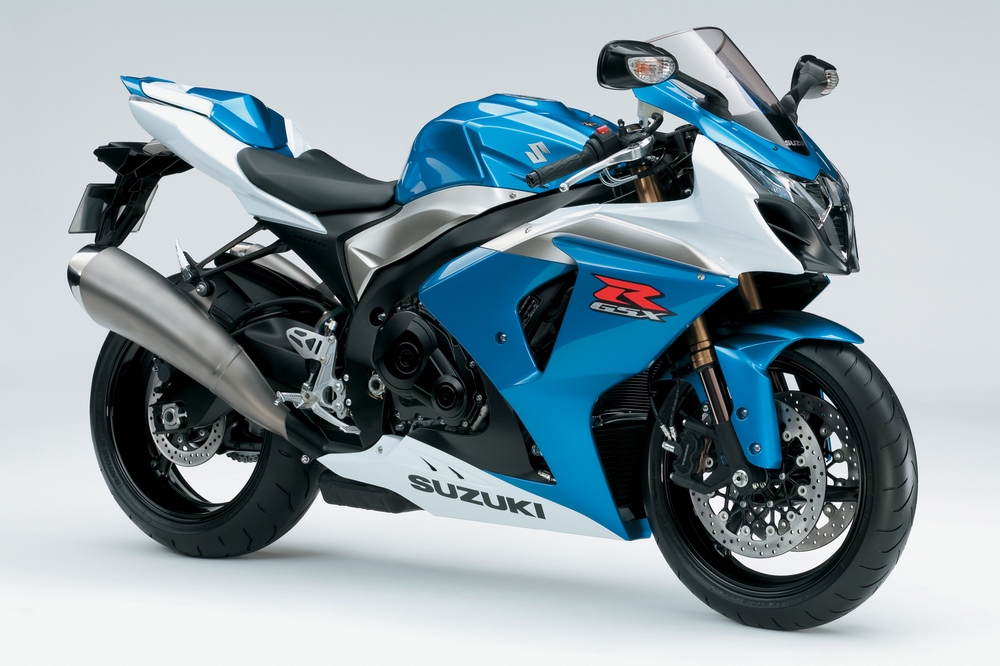
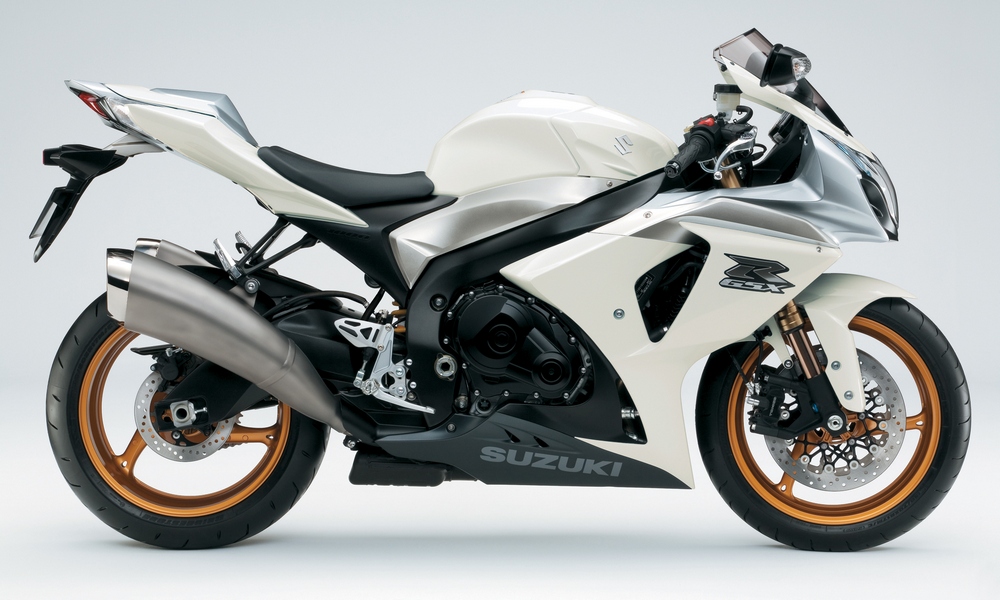
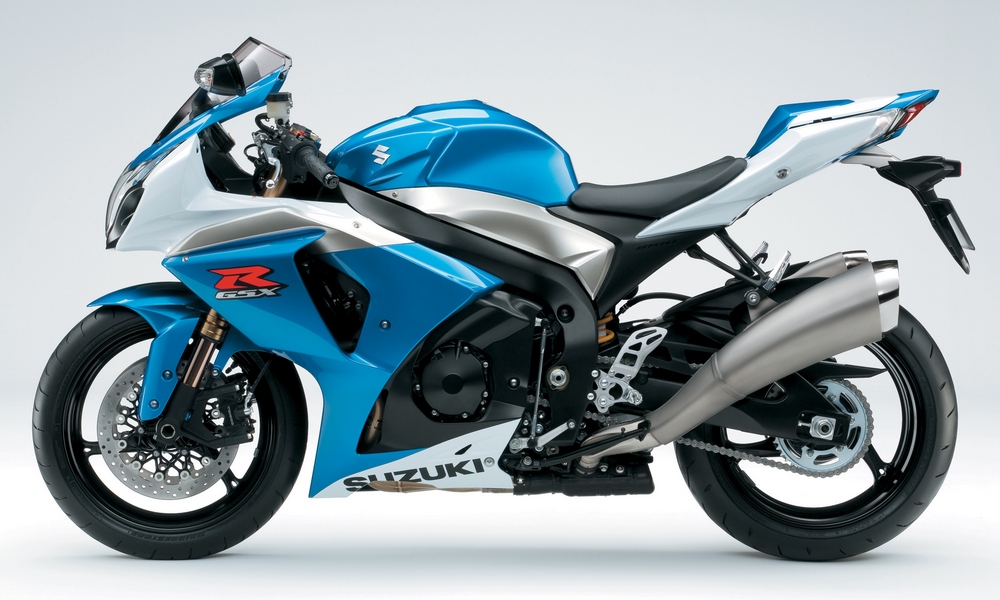
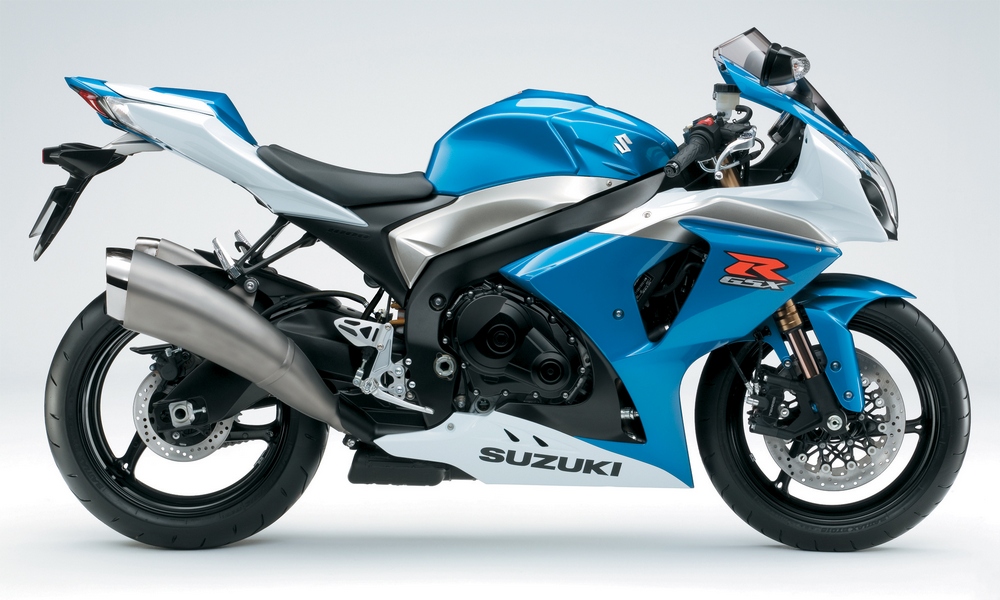
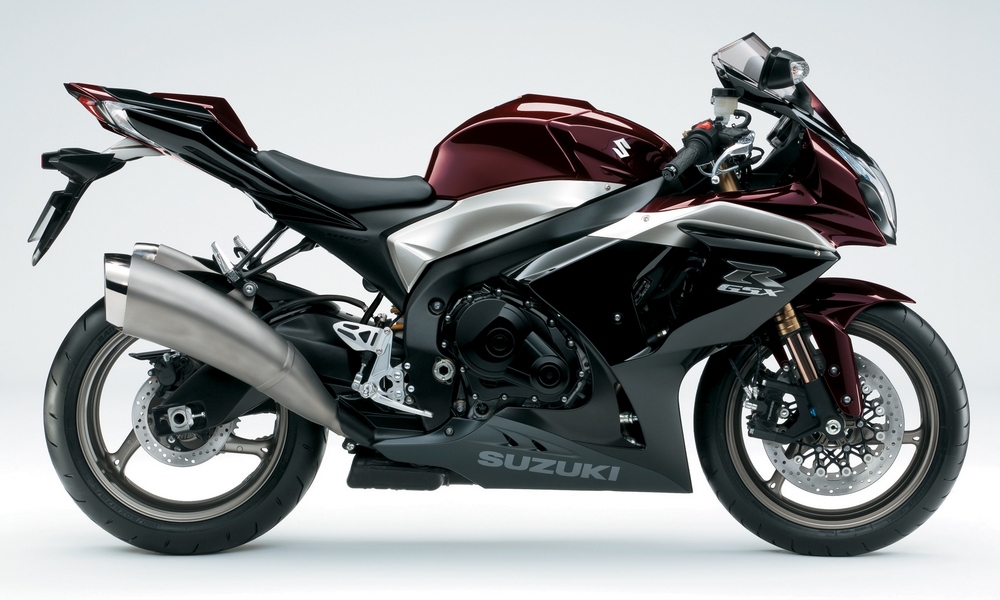
2009 Suzuki GSX-R1000 K9
  
 
The Suzuki GSX-R1000 is a legendary
case study in high-performance design. Since its introduction
almost a decade ago, the GSX-R1000 has won races and
filled the 1000cc production based road racing grids
worldwide, earning its reputation as The Top Performer.
From the start, it was a motorcycle design ahead
of its time. Year after year, the GSX-R1000 continued
to win races and championships with relatively minor
engine refinements and periodic chassis updates.
The GSX-R1000 offered riders everywhere a chance
to Own The Racetrack.
Only now is the would-be competition starting to
catch-up.
And the same team of dedicated Suzuki engineers responsible
for designing and updating the original GSX-R1000
has delivered an answer.
Introducing the all-new 2009 Suzuki GSX-R1000. With
a more powerful, cleaner-running engine. A more nimble
chassis and more responsive suspension. In a more
compact and lighter package. Wrapped with an edgy
new look. All delivering a renewed invitation for
riders worldwide.
.The 2009 Suzuki GSX-R1000 is a product of the innovative
Suzuki Intergrated Design approach, a dedicated team
of engine, chassis, electronic and aerodynamic specialists
working together to expand the boundaries of motorcycle
performance. The GSX-R1000 engine is shorter front
to rear, allowing engineers to use a shorter wheelbase
and a longer swing-arm to improve racetrack performance.
The 2009 engine is, allowing a narrower frame and
bodywork, in turn reducing projected frontal area
and improving aerodynamic performance.
Overall the GSX-R1000 is about 5 kilograms lighter
for 2009, producing a class leading power to weight
ratio, and the integrated design of the engine and
chassis raises the concept of Total Performance to
an entirely new level.
More Power & Torque
The new 999cm3 GSX-R1000 engine is a clean-sheet
design, built to maximize combustion efficiency and
get the most out of each drop of fuel. The result
is more power and torque across the entire rpm range,
with enhanced throttle response and reduced exhaust
emissions.
The basic design elements remain true to the GSX-R1000
racing heritage. Four cylinders, DOHC with chain drive,
bucket tappets, and four titanium valves per cylinder,
set at narrow angles. Forged aluminium-alloy pistons
with short skirts and cutaway sides, carried by chrome-molybdenum-steel
connecting rods finished with a shot-peen treatment
to harden the surface and increase overall strength.
A forged, steel-alloy crankshaft. Cylinders integrated
into the upper crankcase casting and plated with the
race-proven nickel-phosphorus-silicon-carbide bore
coating known as SCEM (Suzuki Composite Electrochemical
Material), reducing friction and improving heat transfer,
durability and ring seal. Downdraft fuel injection
controlled by the latest version of the groundbreaking
digital engine management system pioneered by Suzuki
engineers, with pressurized ram-air induction and
dual-injector, double-barrel ''Suzuki Dual Throttle
Valve (SDTV) throttle bodies.
A new, more over-square bore x stroke of 74.5 mm
x 57.3 mm (changed from 73.4 mm x 59.0 mm) gives the
engine better overall tuning potential. Specifically,
the shorter stroke inherently increases performance
at high rpm. But Suzuki engineers were also able to
increase low-range and mid-range performance and broaden
the torque curve by reshaping the combustion chamber,
increasing the compression ratio, and developing new
cam profiles.
The compression ratio is now 12.8:1 versus 12.5:1.
To help maintain intake efficiency and power output
at higher rpm, the downdraft intake manifolds are
now 10 mm shorter. The Suzuki Ram Air Direct (SRAD)
airbox is also redesigned, and is lighter.
The revised combustion chamber shape also accommodates
larger intake and exhaust valves. Intake valve size
is increased from 30 mm to 31 mm and exhaust valve
size is increased from 24 mm to 25 mm. The steel alloy
used to produce the double valve springs for each
valve has also been revised, along with camshaft profiles.
The intake camshaft itself is shorter, reducing weight,
and the cam angle sensor used by the engine management
system has been relocated from the left end of the
intake cam to the center of the exhaust cam. The shorter
intake cam and relocated sensor allowed the cylinder
head to be reshaped, reducing weight. The close-ratio
six-speed transmission's input and output shafts are
now triangulated with the crankshaft. The crankshaft
is positioned more forward in the cases relative to
the cylinder centerline, the transmission input shaft
has been moved upwards and the transmission output
shaft has been moved forward. As a result, the distance
between the crankshaft and the transmission output
shaft (also known as the countershaft) has been reduced
by 59.6 mm, allowing the case length to be reduced
and making the engine shorter front-to-rear.
Repositioning the transmission shafts also allowed
the crankcase assembly to be simplified, now using
two bolted-together (upper and lower) sections instead
of three, eliminating 16 screws and helping to further
reduce engine weight by about 670 grams.
The single vibration-reducing counter-balance shaft
located in front of the crankshaft is smaller, now
measuring 20 mm (in bearing diameter) instead of 23
mm, reducing mechanical losses.
The clutch is now directly operated by a cable instead
of a hydraulic system, improving feel and feedback
reaching the rider through the control lever, as well
as reducing weight. A new integrated clutch and starter
motor cover is about 200 grams lighter than the two
individual covers previously used.
A large radiator with an efficient trapezoidal shape
developed on factory team racebikes helps maintain
stable engine running temperatures, contributing to
efficient combustion and consistent power production
while also allowing the use of narrower bodywork,
reducing drag. A new, more efficient engine oil cooler
also has a trapezoidal shape instead of a more conventional
rectangular shape, allowing the lower fairing to be
narrower, again contributing to improved aerodynamics
by reducing drag.
State Of The Art Digital Engine Management
And Emissions Control
A powerful microprocessor in the Electronic Control
Module (ECM) runs the 2009 GSX-Rl000's advanced engine
management system, starting with the latest versions
of the revolutionary downdraft double-barrel Suzuki
Dual Throttle Valve (SDTV) throttle bodies introduced
on the first GSX-RI000.
The SDTV system uses two butterfly valves in each
throttle-body barrel, the primary valve controlled
by the rider via the twist grip and the secondary
valve controlled by the ECM. As the rider opens and
closes the primary valve, the ECM computer reads throttle
position, engine rpm and gear position and then opens
and closes the secondary valve incrementally to maximize
intake charge velocity, further enhancing combustion
efficiency, making throttle response more linear and
improving low-end and mid-range torque.
Each throttle body feeds two cylinders, and each
throttle-body barrel carries two ultra-fine-atomization,
12-hole injectors. Each cylinder's primary injector
is aimed at a steep, 30-degree angle down the intake
port to improve fuel atomization and operates under
all conditions. The secondary injector is aimed at
the secondary throttle valve and operates to add fuel
for high-rpm, high-load conditions. The amount of
fuel delivered by each primary injector is calculated
by the ECM system based on engine rpm, intake pressure
and throttle position. The amount of fuel delivered
by each secondary injector is calculated based on
engine rpm and throttle position.
The engine management system's Idle Speed Control
(ISC) improves cold starting, reduces cold-start emissions
and stabilizes engine idle under various conditions
by automatically regulating the volume of fresh air
fed into the throttle body idle circuits, based on
coolant temperature.
The ECM also controls ignition timing and spark advance,
based on advanced 3D mapping. Spark plugs with finer,
Iridium alloy electrodes produce a stronger spark
for better combustion.
The newest version of the unique Suzuki Advanced
Exhaust System (SAES) incorporates staggered-length
titanium head pipes, a collector, a short mid-pipe
and a stainless-steel under-engine chamber that leads
to two low-slung MotoGP-inspired titanium mufflers,
one on each side. A Suzuki Exhaust Tuning (SET) servo-controlled
butterfly valve built into the mid-pipe helps maximize
torque throughout the rpm range and across varying
running conditions, by optimizing exhaust system back
pressure based on engine rpm, throttle position and
gear position. The exhaust mid-pipe is also fitted
with an oxygen sensor monitored by the ELM, which
precisely adjusts the fuel injection to promote cleaner
burning. The under-engine chamber carries a catalyzer,
to help reduce hydrocarbon (HC), carbon monoxide (CO)
and nitrogen oxide (NOx) emissions.
The overall exhaust system design helps keep the
center of gravity as low as possible and helps centralize
mass, while delivering the larger internal volume
needed to produce excellent power and more torque
while still meeting the latest emissions and noise
regulations.
Ventilation holes positioned underneath the bottom
of the piston stroke in each cylinder bore allow air
trapped underneath descending pistons to quickly escape
to adjacent cylinders, where the pistons are rising.
This design feature reduces mechanical power losses
and internal pumping pressure, improving piston ring
sealing.
Rider Selectable Engine Mapping With Three
Performance Settings
The unique Suzuki Drive Mode Selector (S-DMS) system
allows the rider to select one of three fuel injection
and ignition system maps, adjusting power delivery
to suit personal preference.
Using a button now located on the left handlebar
control module, the rider can instantaneously switch
between the three available maps, which are designated
A, B and C as displayed on the instrument panel.
The A setting produces normal power delivery. The
B setting produces more linear power delivery at low
and mid-range rpm. The C setting makes power delivery
more linear across the entire rpm range.
The mapping for each S-DMS setting was developed
using experience gained building racebike maps for
rainy, mixed and wet conditions. Using the system,
a rider can select one map for one part of a racetrack
and another map for another part of a racetrack. Or
a rider can choose one map for a high-speed racetrack
and a different map for a tighter racetrack, or change
the map selection at the end of a long race, when
tyre grip is reduced.
On the road, a rider can select a map to suit personal
preferences in various riding situations, for example
choosing one map for tight, twisty roads and another
map for motorway cruising.
An All-New Chassis
The 2009 GSX-R1000 retains key chassis design elements,
including a twin-spar cradle frame welded together
using just five cast aluminum-alloy sections, including
a steering head section, two main-spar / swingarm
pivot plate sections, and cross braces above and below
the swingarm. The aluminum-alloy swingarm is welded
together using just three castings, and is arched
to make room for the dual mufflers to be tucked in
tightly on each side.
But the new, more compact 2009 engine allowed the
GSX-Rl000's integrated design team to shorten up the
mainframe, reducing the distance between the steering
head and the swingarm pivot while also reshaping the
main spars to precisely fit the contours of the new
engine. That made room for a longer swingarm despite
the fact that the wheelbase is 10 mm shorter, now
measuring a class-leading 1405 mm. The swingarm itself
is now 33 mm longer, measuring 577 mm from the center
of the pivot shaft to the center of the rear axle
in the standard position.
The shorter wheelbase contributes to more nimble
cornering on the racetrack, while the longer swingarm
improves traction and acceleration out of racetrack
corners while also resisting rear suspension squat.
A new, one-piece die-cast aluminum-alloy rear subframe
and tail section support is lighter, and bolts onto
themain frame. Seat height is unchanged at a class-leading
810 mm.
More Responsive Suspension
The 2009 GSX-R1000 features a revolutionary new front
suspension design co-developed by Suzuki and Showa
engineers and first taken to victory in the grueling
Suzuka 8-Hour endurance race. Conventional high-performance
inverted forks have an internal cartridge assembly
that fits inside the fork leg on each side. The new
BPF (Big Piston Frontfork) design eliminates the internal
cartridge assembly inserted into each fork leg and
instead uses a single, 39.6 mm upper piston riding
against the inside wall of the inner fork tube.
The larger BPF piston and shims produce more effective
valving, with more controlled compression delivering
better feedback to the rider. The difference is especially
noticeable during hard braking.
Stiction, or resistance to initial fork movement,
is also reduced, and changes in internal fork pressure
are minimized, improving response to small bumps and
pavement irregularities. The 43 mm inner fork tubes
have a carbonized titanium coating to further reduce
stiction.
The BPF design relocates the fork springs to the
bottom of the each fork leg, where they are completely
submerged in oil, reducing fork oil foaming and thus
contributing to more stable damping.
Rebound and compression valving adjustment screws
are indented into the fork caps. Spring preload is
adjusted at the bottom of the fork leg assembly.
The BPF system simplifies fork revalving, because
the entire damping assembly may be quickly pulled
out of the top of each fork leg and replaced without
completely disassembling the forks. Professional race
teams testing the BPF system have been able to change
damping in less than 10 minutes, while on pit lane.
The new front forks are also 720 grams lighter than
the conventional forks they replace.
The Showa rear shock works through an aluminum-alloy
linkage mounted on the swingarm, with extruded aluminum-alloy
link rods connected to the frame. The layout reduces
the lever ratio as the rear wheel moves upward, making
the suspension more progressive and more responsive
and increasing traction over pavement ripples while
still responding smoothly over larger bumps. The shock
itself features adjustable rebound damping, spring
preload, and both high-speed and low-speed compression
damping.
An electronically controlled, automatic steering
damper is fitted as standard equipment. The ECM monitors
motorcycle speed and directs a solenoid to move a
tapered needle away from or toward a seat in the main
damping circuit, reducing or increasing oil flow for
reduced or increased damping. Damping force is increased
at higher speeds, and reduced for lighter steering
at slower speeds.
Front Disc Brakes, With Monoblock Calipers
The GSX-Rl000's front brake system matches fully
floating 310mm drilled discs with radial-mount calipers
and has been upgraded for 2009. New, race-proven monoblock
forged-aluminum-alloy front brake calipers are more
rigid despite each being 205 grams lighter than conventional
bolt-together calipers, reducing flex and improving
feedback reaching the rider through the lever.
Piston bores are machined from one side of the caliper;
a bit cuts through from the outside and continues
across the pad gap into the other side, forming matching
piston bores. A cap is welded into place to seal the
machining hole, using a Friction Stirring Weld (FSW)
process which localizes and minimizes heating of the
forging itself, to avoid heat distortion of the piston
bores.
The four-piston calipers still feature staggered
piston diameters designed to produce more even pad
wear. But the trailing piston on each side of the
caliper now measures 32 mm in diameter (instead of
34 mm) while he leading piston on each side of the
caliper still measures 30 mm in diameter. The radial-pump
front-brake master cylinder now measures 17 mm in
diameter, instead of measuring 19 mm. The changes
further improve feedback to the rider.
To reduce weight, engineers changed the shape of
the front disc carriers. The front and rear cast aluminum
alloy wheels are also lighter.
A Clean New Look, With Improved Aerodynamics
Glance at the 2009 GSX-R1000 and it is obvious that
its styling is sharp, edgy and clean. But thanks to
extensive wind-tunnel development, that exciting styling
does more than make the GSX-R1000 stand out visually.
The upper fairing is wider, providing better wind
protection for the rider's upper body and hands while
actually reducing turbulence and drag. The lower fairing
is narrower, also reducing drag.
Redesigned SRAD (Suzuki Ram Air-Direct) intakes are
positioned closer to the centerline of the fairing
nose, where air pressure is the highest while the
motorcycle is in motion. New louvers in the intake
ducts reduce turbulence and smooth airflow into the
airbox.
The multi-reflector and low-beam halogen bulbs centered
between position lights on each side. The front turn
signals feature clear lenses over amber bulbs and
are incorporated into the rear-view mirror mounts.
The sharply creased fairing sides feature a layered
shape that improves the flow of cooling air through
the radiator and away from the rider, and the fairing
lowers extend rearward to smooth the flow of air over
the dual mufflers. Minimal external fairing screws
reduce turbulence and add to the GSX-R1000's uncluttered
look.
The rear turn signals feature clear lenses over amber
bulbs and the lenses are integrated into and wrap
around the outside edges of the seat cowl. The combination
tail light and brake light is built into the rear
of the tail section.
The seat is designed to be comfortable as well as
complimenting the overall styling, and careful attention
to the relative positioning of the seat, handlebars
and footpegs also contributes to riding comfort. Footpeg
positioning remains adjustable, with a choice of three
different positions in a 14 mm horizontal and vertical
range. The rear brake pedal and master cylinder move
with the right footpeg assembly, and the shift lever
linkage can be adjusted to accommodate
changes in the position of the left footpeg.
The sculpted fuel tank is lighter, while capacity
remains 17.5 litres. A tailsection cover is included,
to replace he passenger seat for solo rides or track
days.
Complete Instrumentation
The instrument cluster is centred around an analogue
tachometer framed by an elegant silver ring, with
an adjacent digital LCD speedometer. Additional LCD
readouts include an odometer, dual trip meters, reserve
trip meter, a clock, a coolant temperature / oil pressure
warning indicator, a gear position indicator, a laptimer
/ stopwatch, a S-DMS setting indicator and a bar graph
indicating the instrument lighting level or brightness.
A programmable engine rpm indicator system incorporates
four LED’s. LED Fuel injection, low-fuel, neutral,
high-beam, coolant/oil pressue and turn signal indicators
are also included. An LED immobilizer activation indicator
is included too.
A speedometer display mode switch is now mounted
on the right handlebar control module and can be used
to trigger the laptimer/stopwatch.
GSX-R1000 K9 Technical Information
Dimensions and Dry Mass
Overall length ...........................................................2045
mm (80.5 in)
Overall width.............................................................
710 mm (28.0 in)
Overall height ...........................................................1130
mm (44.5 in)
Wheelbase ................................................................1405
mm (55.3 in)
Seat height ...............................................................
810 mm (31.9 in)
Curb mass ................................................................203
kg (448 lbs)
Engine
Type.............................................................................Four-stroke,
liquid-cooled, DOHC
Number of cylinders ...............................................4
Bore.............................................................................74.5
mm (2.933 in)
Stroke .........................................................................57.3
mm (2.255 in)
Displacement............................................................999
cm3 (61.0 cu. in)
Compression ratio ..................................................12.8
: 1
Fuel system ..............................................................Fuel
injection
Starter system ........................................................Electric
Lubrication system ................................................Wet
sump
Drivetrain
Transmission ...........................................................6-speed
constant mesh
Gearshift pattern .....................................................1-down,
5-up
Primary drive ratio .................................................1.617
(76/47)
Final drive ratio.........................................................2.471
(42/17)
Chassis
Front suspension
Inverted telescopic, coil spring – Fork Size
Inverted 43mm, spring preload fully adjustable, rebound
and compression damping force fully adjustable.
Rear suspension
Link type, coil spring, oil damped - preload fully
adjustable, rebound and compression damping force
2-way fully adjustable
Caster.........................................................................23.8°
Trail..............................................................................98.3
mm (3.9 in)
Turning radius...........................................................3.4
m (11.2 ft)
Front brake ...............................................................310mm
disc brake, twin
Rear brake.................................................................220mm
disc brake, single
Front tyre size...........................................................120/70ZR17M/C
(58W), tubeless
Rear tyre size ..........................................................190/50ZR17M/C
(73W), tubeless
Electrical
Ignition type ..............................................................Electronic
ignition (Transistorized)
Capacities
Fuel tank.....................................................................17.5
L (4.6/3.8 US/lmp. gal)
|