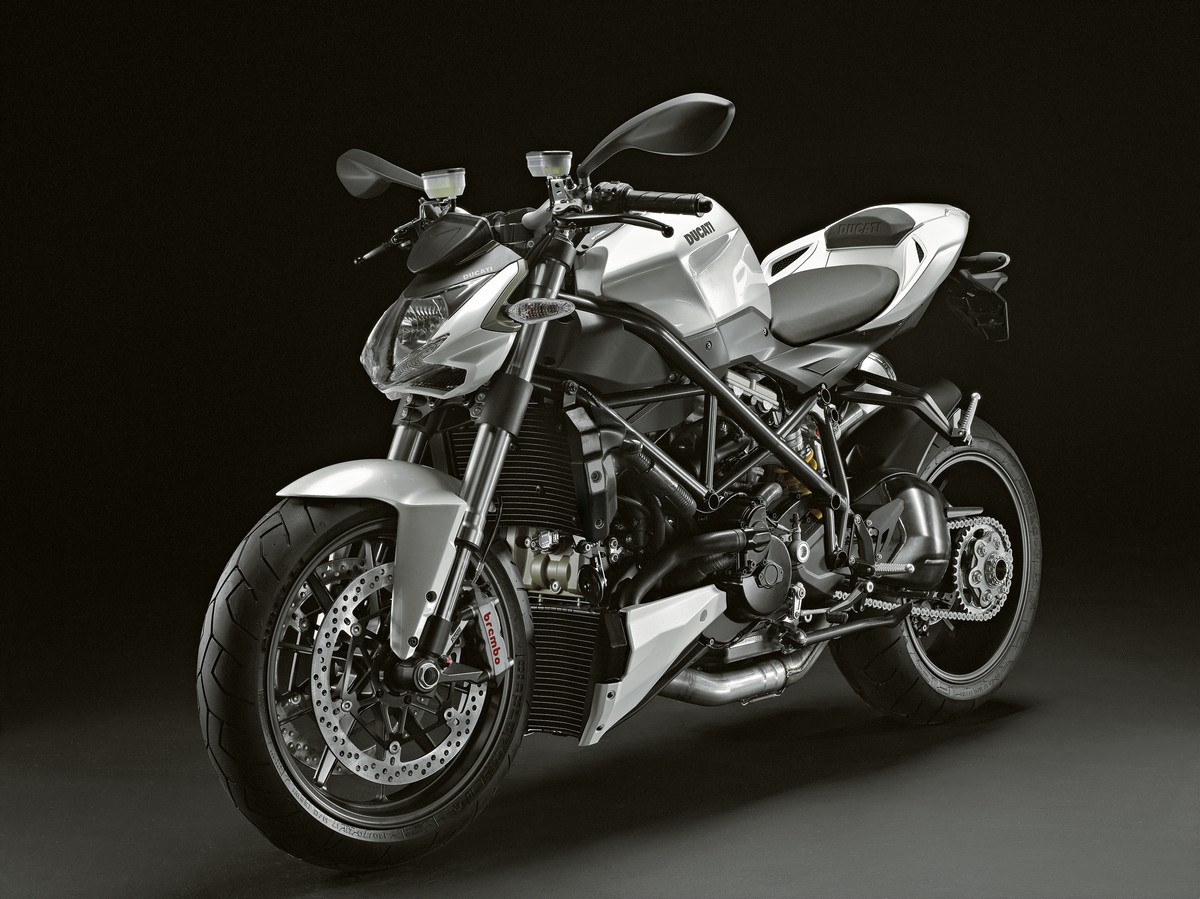
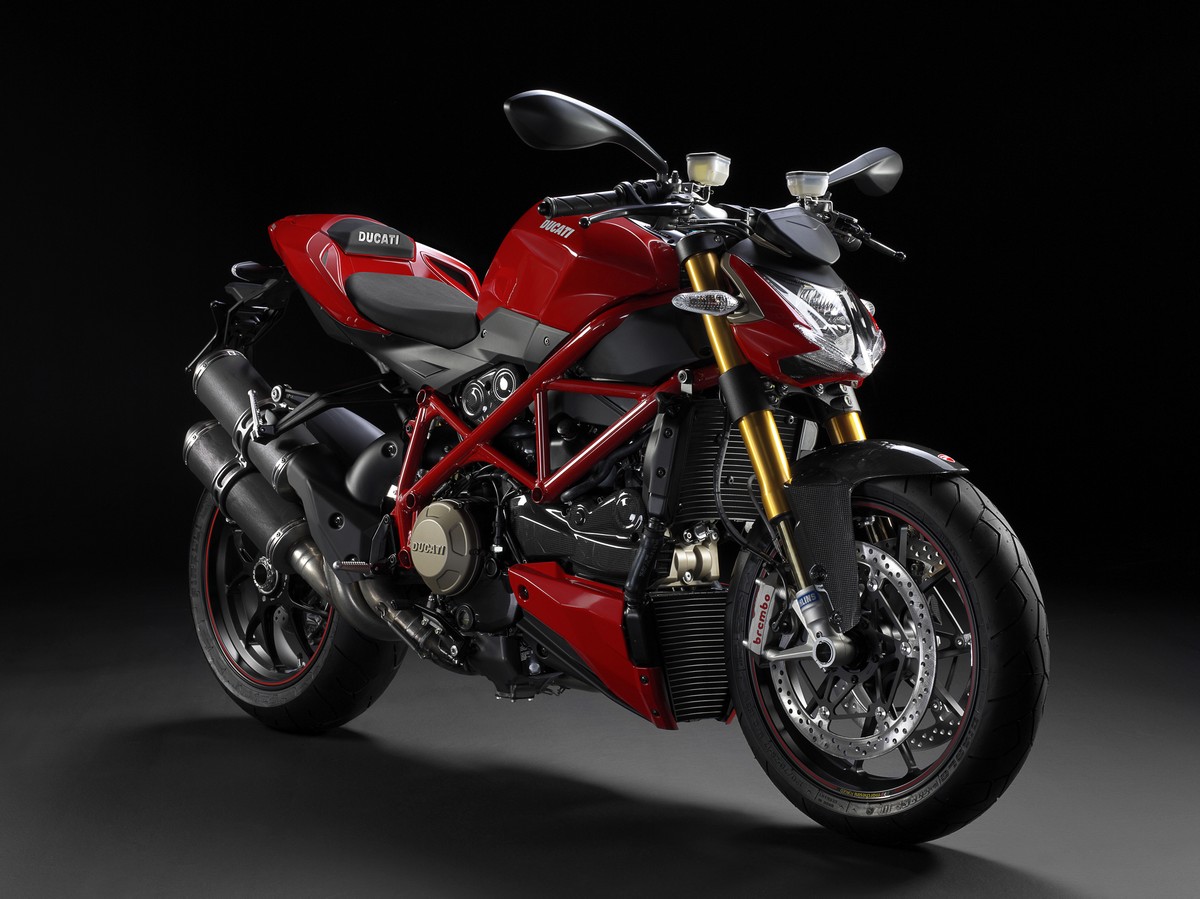
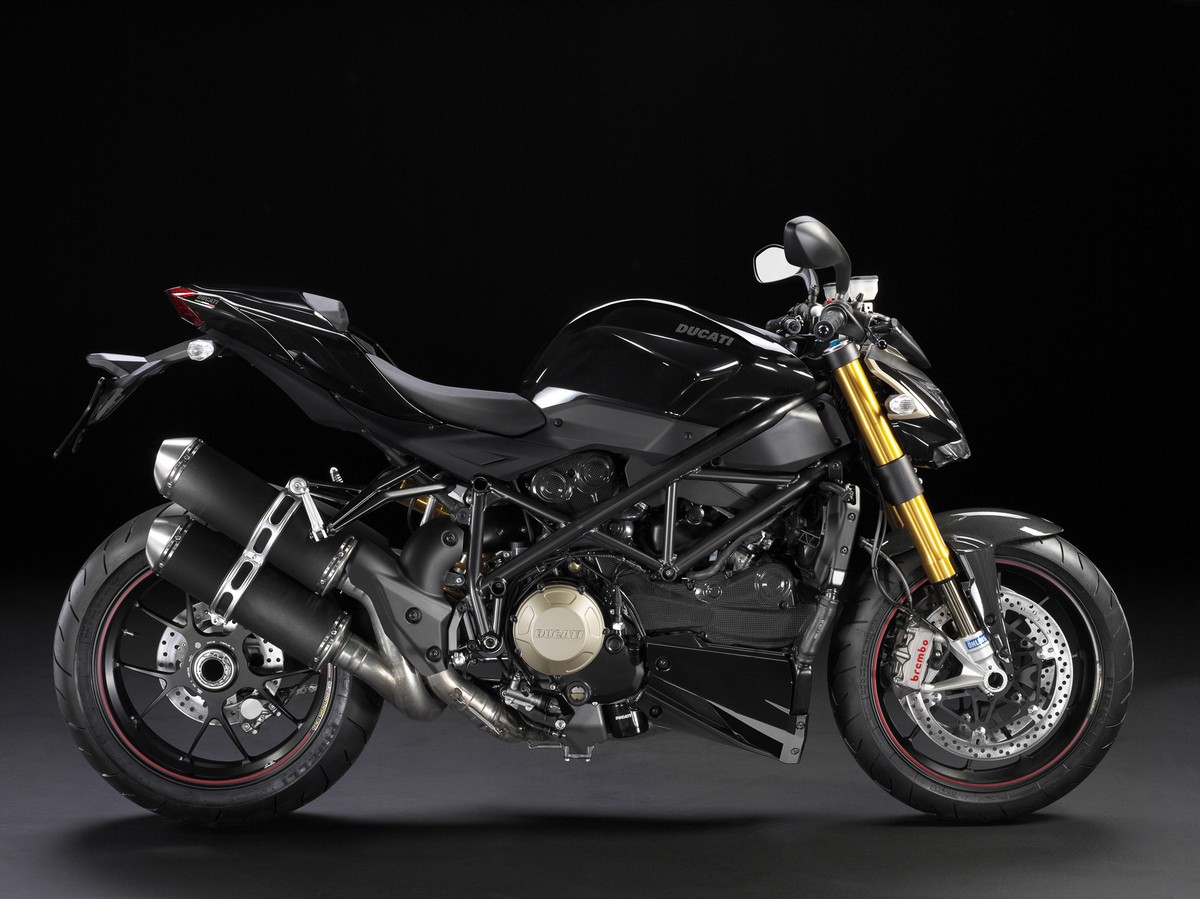
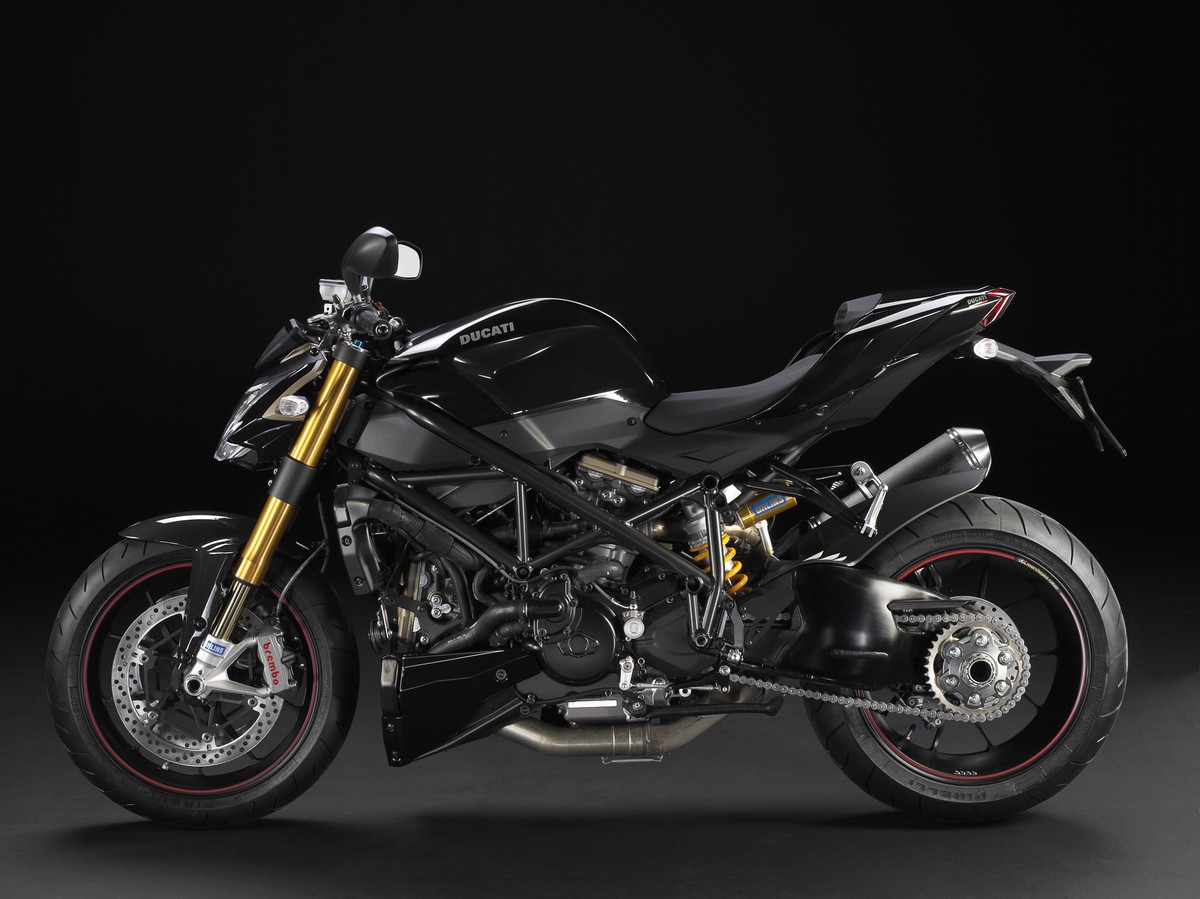
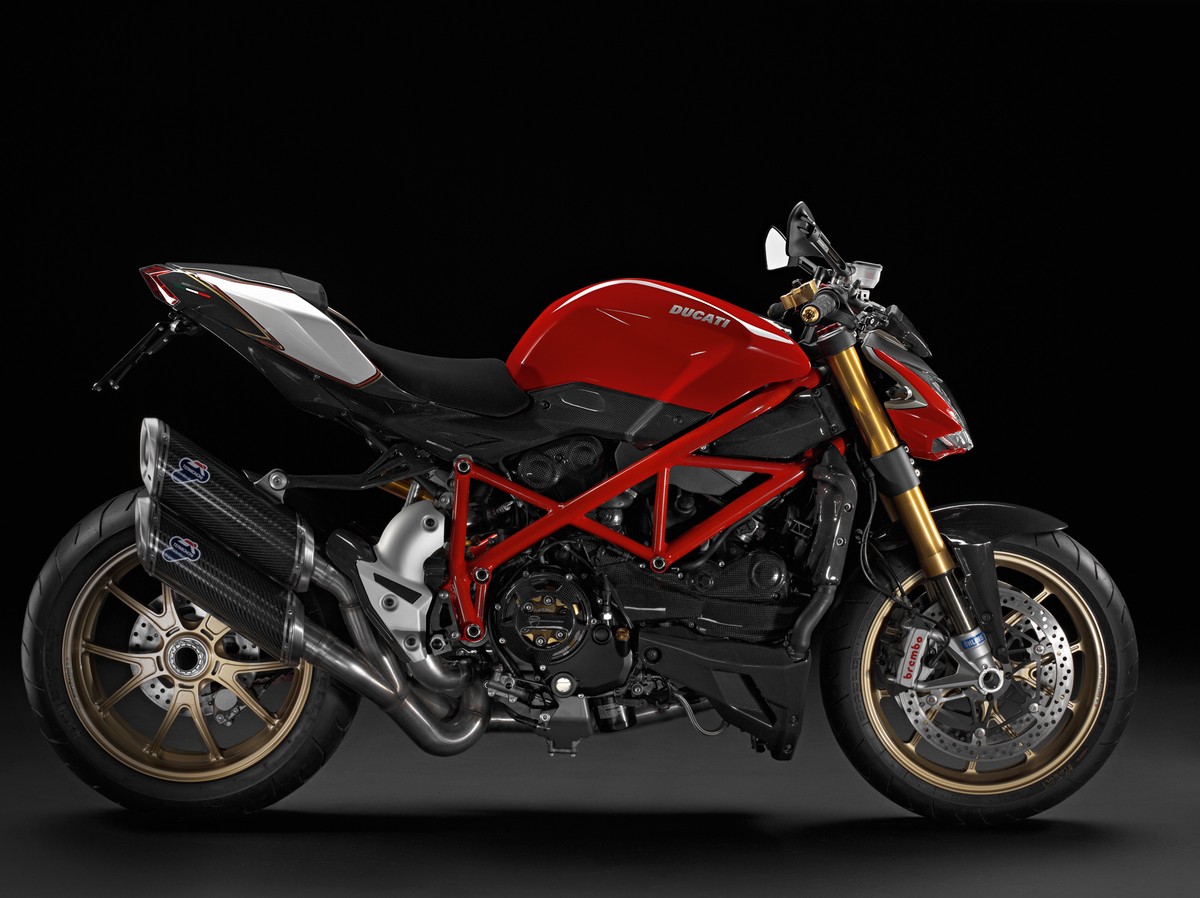
2011 Ducati Streetfighter
  
Soul of a Superbike –
Attitude of a fighter
 For
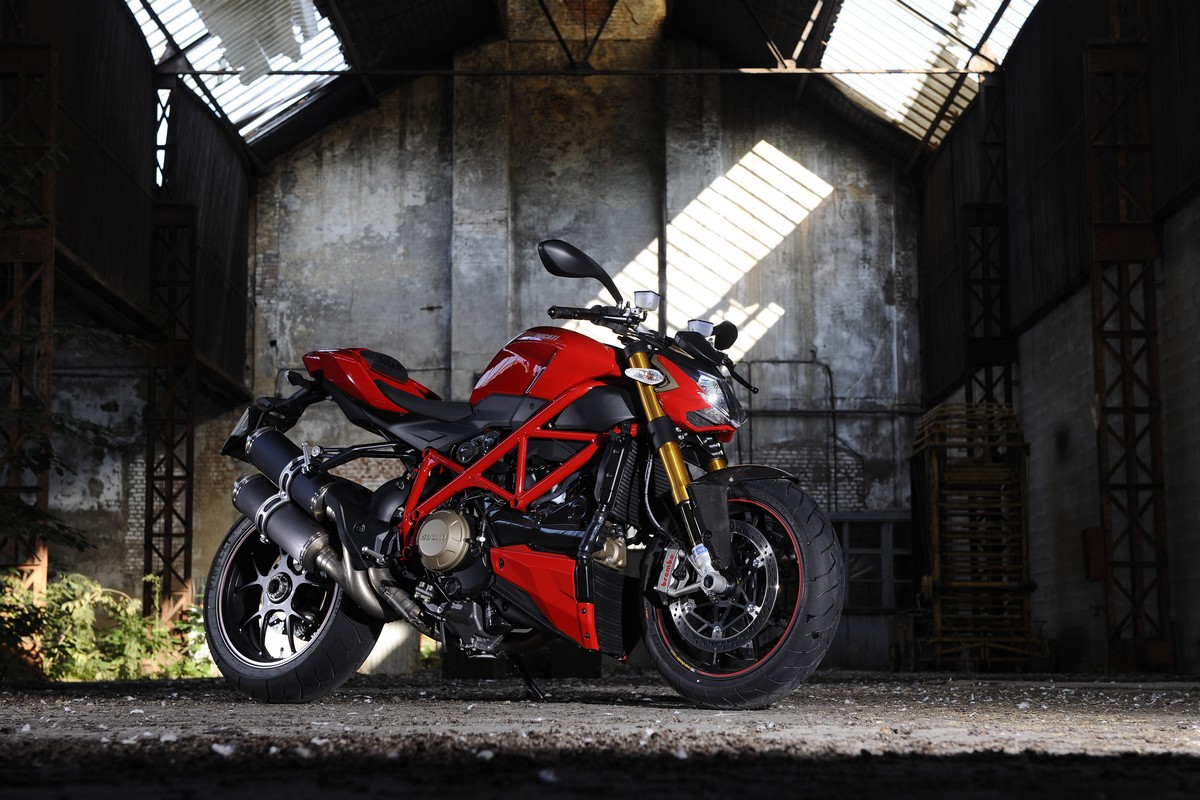
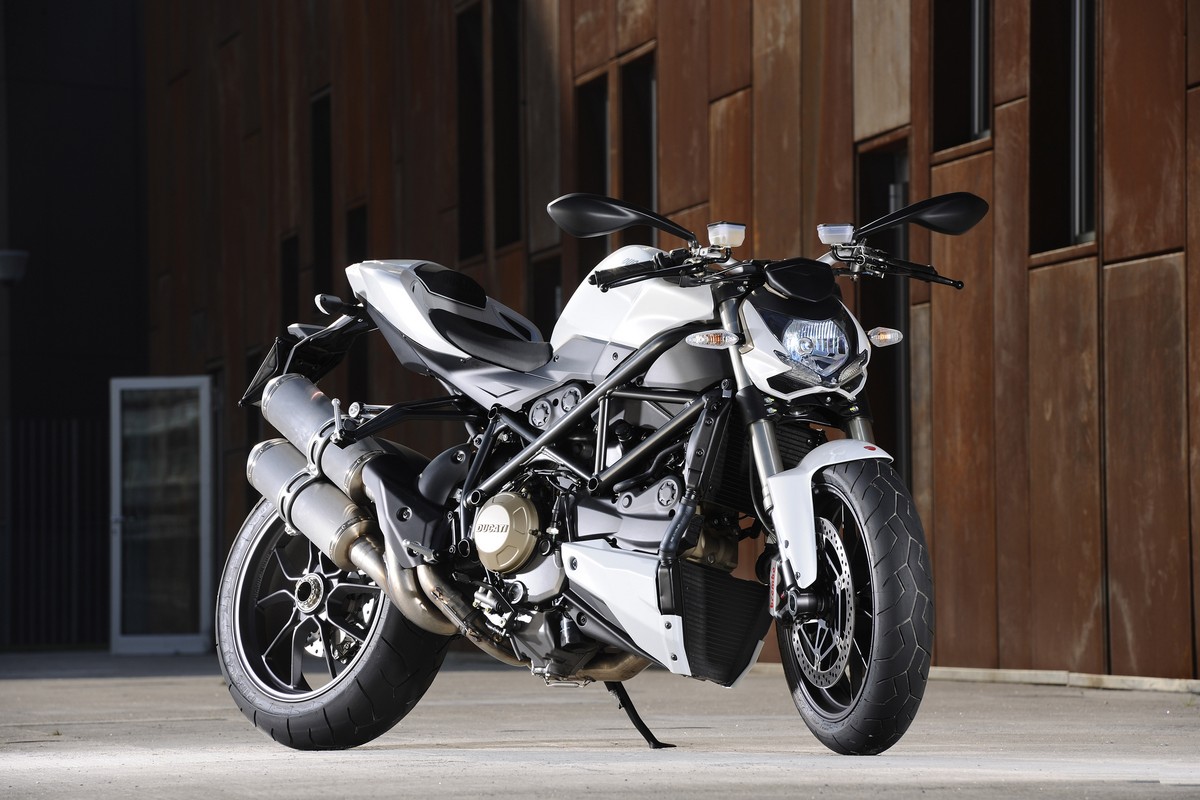
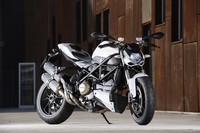
2011, the Streetfighter arrives with a new arctic
white colour scheme, while the Streetfighter S gets
a For
2011, the Streetfighter arrives with a new arctic
white colour scheme, while the Streetfighter S gets
a
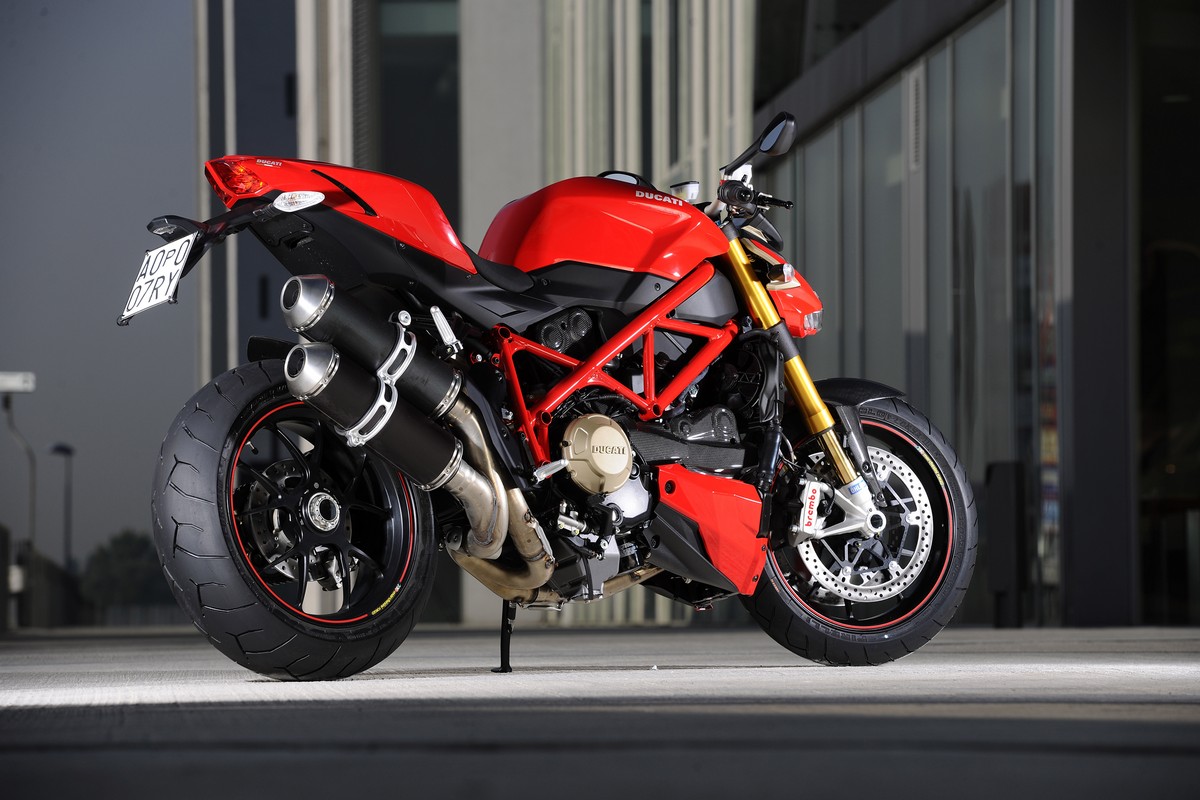
matching red Trellis frame for the red version and
a racing black frame for the new diamond black. Both
Streetfighter models get radiator covers in a new
subtle black finish and both colour schemes of the
‘S’
now have black wheels.
The Ducati Streetfighter scored a round
one knock-out when it entered the ring for the first
time at the
Milan show back in November 2008. Its brutal elegance
stole the ‘Most Beautiful Bike’ award
and raised
the bar for extreme nakeds. The Streetfighter and
Streetfighter S first hit town in model year 2010
and their
asphalt-ripping reputation was an instant hit with
connoisseurs of sport nakeds.
 The
Streetfighter’s Superbike soul combines fighter
attitude and naked sophistication to create pure The
Streetfighter’s Superbike soul combines fighter
attitude and naked sophistication to create pure
adrenaline. Stripped to the bare essentials, its combination
of state-of-the-art race technology, skeletal
styling and contemporary design takes Ducati’s
big naked concept to the very top of the fighter food
chain.
The true Ducati spirit is captured by an incredibly
powerful Desmodromic L-Twin 1098 “Testastretta
Evoluzione” engine producing 155hp with an incredibly
wide spread of power thanks to 85lb-ft (11.7kgm) of
torque. The Streetfighter’s power and precision
is further maximised by weighing in at just 368lb
(167kg) - S
version - and further benefits from technology derived
directly from Ducati’s MotoGP and Superbike
projects. Ducati Traction Control and Data Analysis,
racing-style braking system, fully adjustable suspension
and forged wheels all come as standard equipment on
the ‘S’ to complete the battle-ready package.
Streetfighter made good
 The
Streetfighter culture was born on the backstreets
of Northern Europe during the late 70s and 80s. If
the The
Streetfighter culture was born on the backstreets
of Northern Europe during the late 70s and 80s. If
the
Café racer movement had taken traditional bikes
and transformed them to establish out-and-out sportbikes,
then Streetfighters were definitely anti-establishment.
They evolved by removing the fairings from sport
bikes, fitting higher bars and customising to create
high-performance, over-the-top nakeds. Now, Ducati
have taken that concept and applied their own Italian
sophistication to a stunning, factory-prepared
Streetfighter.
The Ducati Streetfighter is equipped
with everything that made the Superbike a legend:
Awesome L-Twin
muscle with brutal, big-bore torque, thoroughbred
chassis technology, beautiful single-sided swingarm,
planet-stopping Monobloc brakes and pure, sophisticated
class.
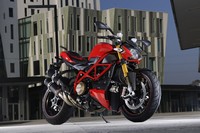 While
the tank and seat shapes leave no doubt as to the
Streetfighter’s roots, it is the upright and While
the tank and seat shapes leave no doubt as to the
Streetfighter’s roots, it is the upright and
commanding riding position that really starts to shape
the character of this ultimate naked. Minimalistic
controls, instrumentation and headlight design leave
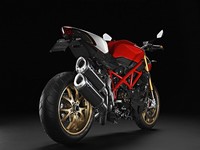
the front looking clean and mean, while twin-stacked
right-side mufflers at the rear leave the tail-end
high and sharp. No other Ducati has ever achieved
such an
aggressive stance while providing a comfortable, empowering,
controllable and enjoyable ride.
Ducati’s ‘S’ treatment
of the Streetfighter takes its sophistication way
off the scale. Superbike spec Öhlins
suspension front and rear with lightweight forged
Marchesini wheels add extra street credibility when
in
town and that all-important ‘feel’ when
exploring the Streetfighter’s sports soul.
Add the awesome street-going Ducati
Traction Control and Ducati Data Analysis as standard
equipment and
it’s clear that the Streetfighter S is not just
muscle – it’s intelligent too.
Lifestyle
 Ducati’s
Streetfighter project was inevitable. The passion
to build the most successful Superbikes ever, Ducati’s
Streetfighter project was inevitable. The passion
to build the most successful Superbikes ever,
mixed with the desire to create iconic, naked motorcycles
was a rush of adrenaline just waiting to happen.
Who else would create a bike for out-and-out purists
to celebrate naked power in all its forms? A bike
with
muscle-engine performance, aggressive chassis engineering
and intelligent electronics all laid bare to
appreciate, respect and enjoy? Ducati build bikes
for enthusiasts – for bikers who appreciate
the details that
come together to make an awesome bike, for perfectionists
who instantly recognise excellence when they
see it.
Ducati motorcycles aren’t just
a means of transport, they enable a lifestyle that
set their rider apart from the
rest of the world. They’re an extension of character
and the ultimate personal statement. The Streetfighter
is built with pure Ducati passion and it’s ready
to impress, whatever the lifestyle.
Take control
 The
Streetfighter riding position is empowering. The lightweight
aluminium tapered bars are higher than on The
Streetfighter riding position is empowering. The lightweight
aluminium tapered bars are higher than on
a Superbike, but still flat enough to ride hard, so
machine control is enhanced and the relationship with
the
front-end remains in tact. Considerable study on seat,
footpeg and handlebar position has maximised
comfort without losing the feeling that you’re
aboard an extreme naked Ducati.
Showing attention to detail typical of all new Ducatis,
the handlebars are gripped by beautifully shaped
clamps that flow sleekly into the bar-risers. Even
the switchgear presents minimalism at its best. The
slimline
bodies house easy-to-use switches and buttons and
feature a unique weapons-like ‘trigger catch’
that
slides down to cover the starter button when activating
the kill-switch. Symmetrically mounted, remote
brake and clutch reservoirs are small, low and compact
and feed slim, radial master-cylinders by Brembo to
complete the clean and uncluttered controls arrangement.
 The
Streetfighter’s instrumentation continues that
same clean look with a compact shape that blends into The
Streetfighter’s instrumentation continues that
same clean look with a compact shape that blends into
the aggressive line of the headlight. Information
additional to the default read-outs is managed from
the lefthand handlebar-mounted switch gear, allowing
the rider to scroll through and select from various
menus.
The display presents rpm and speed, with the former
displayed across the screen in a progressive bar
graph. Additionally, the instruments display lap times,
DTC status and level selected (if activated on
Streetfighter S) time, air temperature, coolant temperature,
battery voltage, two trips and a trip that
automatically starts as the fuel system goes onto
reserve. Warning lights illuminate to signify neutral,
turn
signals, high beam, rev-limit, low oil pressure, fuel
reserve, DTC intervention (if activated on Streetfighter
S)
and scheduled maintenance. The instrument display
is also used as the control panels for the DDA and
DTC
systems as well as listing lap times recorded by using
the high-beam flash button as a stopwatch.
A chassis born to fight
At a class-leading 169kg (373lb) dry
weight for the Streetfighter and an incredible 167kg
(368lb) for the
Streetfighter S, both come to the fight with the highest
power-to-weight ratio in their class. The purposebuilt
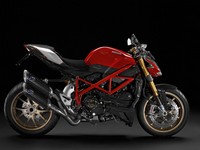
Trellis frame, which uses 25.6° of rake compared
with the Superbike’s 24.5°, ensures a well-planted
front-end, while a 35mm longer single-sided swingarm
at the rear ensures the Streetfighter’s acceleration
need never be compromised. The longer, beautifully
created aluminium swingarm follows the same dual
construction detail as the Superbike models and is
anodised finished in black.
The lower triple-clamp also gets more
muscle development. Formed in a strength-enhancing
gull-wing
shape for even more rigidity, it maintains a vice-like
grip on the fork legs, giving a precise and solid
feeling
through the bars on fast direction changes.
The revised rake, longer wheelbase
and cross-mounted steering damper ensure stability
even under the
extreme acceleration of Ducati’s incredible
L-Twin torque.
Suspension
The Streetfighter is armed with fully
adjustable 43mm Showa forks up front and a fully adjustable
Showa
monoshock at the rear, giving the bike high performance
agility and the rider absolute ‘feel’
and confidence
from sure-footed handling.
The forks feature a natural chrome
slider finish and radial mounts for the brake callipers
and are fully
adjustable in spring preload as well as compression
and rebound damping. On the rear, the single Showa
unit operates through a progressive linkage and is
also fully adjustable in spring preload and damping,
both
in compression and rebound.
The Streetfighter S pushes the spec
way up with 43mm Superbike-spec Öhlins forks
that have sliders
treated in low-friction TiN. Fully adjustable in spring
preload and precisely adjustable in compression and
rebound damping, they ensure ‘S’ feeling
and finesse when the fight gets rough.
Taking care of the rear of the ‘S’
is a single high-spec Öhlins unit fully adjustable
in spring preload with full
adjustment and highly engineered control of compression
and rebound damping. The unit is also fitted with
a ride enhancing top-out spring which helps maintain
rear tyre contact under extreme conditions.
Important attention to performance detail is inherited
from its Superbike bloodline with both the
Streetfighter and Streetfighter S having rear ride-height
adjusters that allow fine correction after setting
personalised spring preload.
Wheels
10-spoke wheels in lightweight aluminium
keep the overall motorcycle weight down and maintain
an allimportant control on unsprung weight. This weight
is made up of all the components between the
suspension and the road and consists of wheels, tyres,
brake discs and callipers etc, but when rotating at
high speed, it is the wheels that store most of the
kinetic energy and offer the most resistance when
steering, accelerating or braking. Their weight saving,
therefore, is a serious contribution to both the
handling and the performance of the bike and the Streefighter
pulls out all the stops to be the best.
The Streetfighter S reduces weight
even further by using Y-shaped, 5-spoke wheels by
Marchesini, forged
and then machined in lightweight aluminium. The Streetfighter
wheels are finished in graphite grey, while
the ‘S’ moves to black for 2011 with both
models rolling out on Pirelli Diablo Corsa lll tyres.
Brakes
Both the Streetfighter and Streetfighter
S use Brembo’s powerful Monobloc calliper race
technology.
Machined from a single piece of alloy, the callipers
achieve higher rigidity and resistance to distortion
during
extreme braking. The result not only delivers planet-stopping
brake power, but also gives an enhanced and
precise ‘feel’ at the brake lever. The
twin Monobloc callipers each have four 34mm pistons
that grip huge
330mm discs to achieve their spectacular performance.
The weight of the discs has been kept to a
minimum by using racing-style narrow braking surfaces.
Power house
The world-beating 1098 Testastretta
Evoluzione needs little introduction. Debuting in
2007, it went on to
form the basis of a motor that powered Ducati to Superstock
and Superbike World titles that left the
competition stunned. Now, its massive bore, short
stroke and incredible torque powers Ducati’s
most
extreme naked and the results are equally as stunning.
Producing a ballistic 85lb-ft (11.7kgm)
of torque and 155hp (114kW), the Streetfighter’s
awesome 1098
power house fears nothing of the naked sports competition.
The L-Twin, Testastretta Evoluzione engine
gives both the best power-to-weight and the best torque-to-weight
ratios in its class.
Surface features include enhanced detailing on the
cam belt covers and the magnesium dry clutch cover
as
well as a new black finish for the main outer casings
and carbon-grey finish for the crankcases, which
employ the same weight-saving technology used for
the 1198.
The vacuum die-cast process used to
make the crankcases ensures consistent and precise
wall thickness
and increased strength from absolute material purity
while reducing weight considerably.
Using the Testastretta narrow valve
angle, super-straight intake ducts and specially shaped
combustion
chambers, the Desmodromic motor continues to breathe
through MotoGP-derived elliptical throttle bodies
and four large diameter valves per cylinder to achieve
its incredible spread of torque.
A high performance six-speed box and racing-style
dry clutch makes sure the transmission package delivers
155hp as efficiently as possible.
The Streetfighter’s power house
is protected by twin coolant radiators, carefully
curved in pure naked style
for optimum performance and stunning with visual effect.
The upper radiator is assisted by lightweight,
high flow electric fan assemblies while the lower
sits in the front of the belly pan, which also houses
a
highly efficient oil heat exchanger.
Having more experience and success
with twin-cylinder high performance engines than any
other
manufacturer, the air-cooled L-Twin remains central
to Ducati's philosophy of motorcycling. This
experience, plus constant investment in quality by
design, advanced materials and engineering techniques,
has enabled a distance between service intervals of
7,500 miles (12,000 kilometres), making Ducati
ownership even more enjoyable than ever.
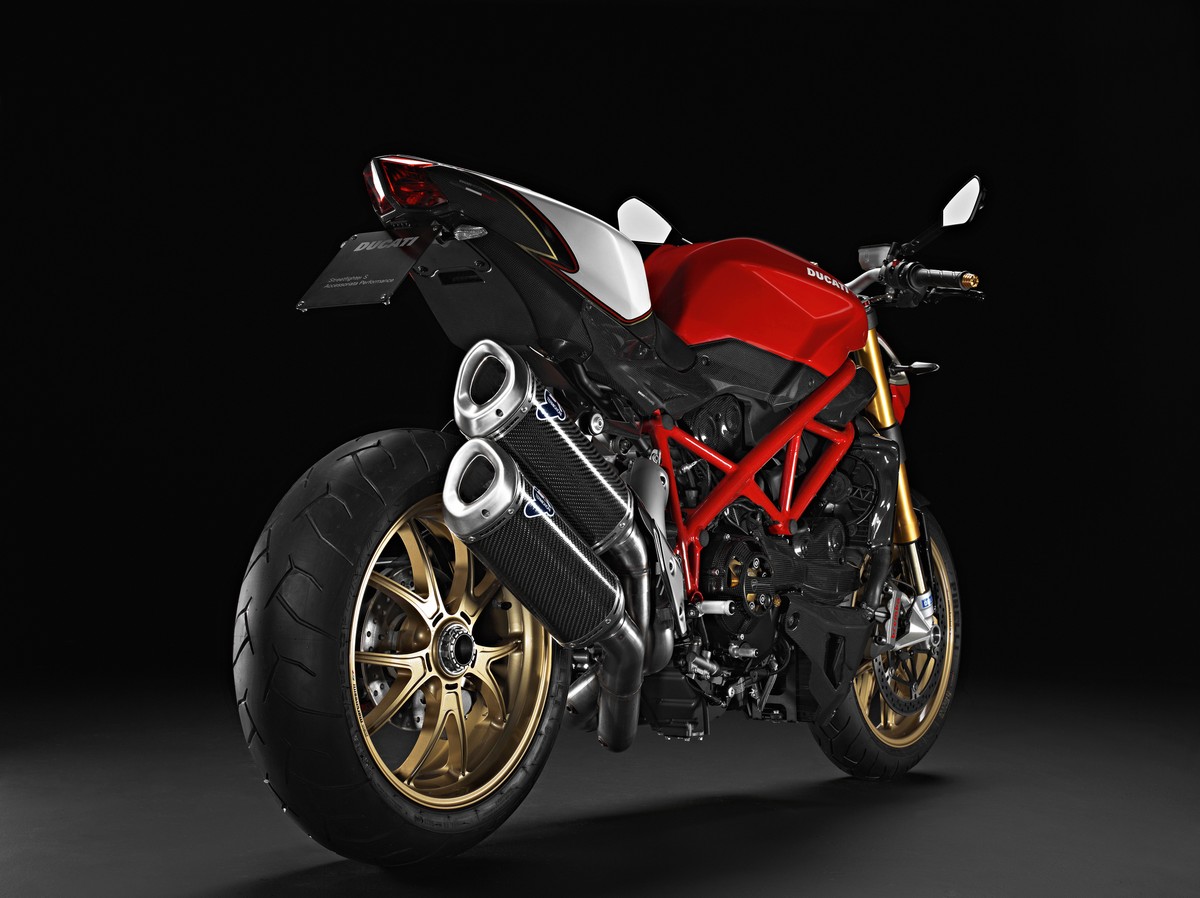
Cannon-style mufflers
The massive Streetfighter 2-1-2 exhaust
system is made from weight-saving 1mm thick steel
and flows
from 58mm to 63.5mm diameter pipes. The system uses
two lambda probes to ensure precise fuel
mapping for optimum performance and an electronic
valve in the mid-section to achieve a wide spread
of
power.
The cannon-style, vertically stacked
mufflers sport the same finishes as the Superbike
family: Brushed steel
for the Streetfighter and black brushed steel for
the Streetfighter S, both delivering the famous Ducati
LTwin
sound synonymous with raw, Desmo power.
Lighting
The aggressive looking headlight is
the ‘face’ of the Streetfighter and it
leaves little doubt as to its
character. While the main lighting source and multi-reflector
design provides powerful illumination to cut
through the night, its two evil eye strips of LED
positioning lights give a striking and unmistakable
identity
to the bike.
Keeping design matters clean and stylish,
the directional indicators remain unobtrusive with
clear lenses
and coloured bulbs, while the rear light is integral
to the shape of the tailpiece, providing unobscured
illumination while maintaining the smooth and elegant
look to the high and sharp rear-end.
Naked detail
More attention to detail than ever
before went into creating the Ducati Streetfighter.
Repositioning many of
the components usually hidden by bodywork and continuing
to keep them out of sight was a major
challenge for the design and engineering teams, but
they’ve pulled it off with impressive results.
Add to
this details such as the perfectly formed passenger
seat cover, a rear hugger fitted as standard equipment
and the pre-minimalised licence plate holder, and
it’s plain to see that Ducati have gone that
extra step to
achieve the highest level of finish.
Streetfighter S
Ducati’s ‘S’ treatment
of the Streetfighter pushes its tech spec to the red
line. Öhlins suspension front and
rear and lightweight Marchesini forged wheels stack
up serious credibility, while the front fender and
cam
belt covers in super-light carbon fibre help reduce
the dry weight to an extreme 167kg (368lb).
But the ‘S’ sophistication doesn’t
end there. Awesome street-going Ducati Traction Control
and Ducati Data
Analysis are standard issue, making it clear that
the Streetfighter S is not all muscle – it’s
intelligent too.
Intelligent muscle
The Streetfighter S was Ducati’s
first ever naked sportbike to be fitted with their
awesome Ducati Traction
Control (DTC) system.
Accessible from the left-hand switchgear
and displayed on the digital instrumentation, the
system offers a
choice of eight profiles, or ‘sensitivity levels’,
each one programmed with a wheel-spin tolerance matched
to progressive riding levels of skill, graded from
one to eight.
While level eight administers a confidence-building,
high level of interaction from the system by activating
upon the slightest amount of wheel-spin, level one
offers a much higher tolerance, resulting in less
intervention for highly competent riders. Once the
level is selected and DTC activated, both are displayed
on the Streetfighter instrumentation. The system then
analyses data sent from front and rear wheel speed
sensors to detect wheel-spin. Should the system recognise
wheel-spin above a certain threshold, the DTC
ECU instantly evaluates the many possible wheel-spin
scenarios before administering two types of
interaction in varying amounts.
DTC is able to sense the exact use
that the Streetfighter is being put to. From slow
mid-corner acceleration
with considerable vehicle inclination to high speed
corner exits while almost upright, DTC is intelligent
enough to react according to each and every situation.
It’s even smart enough to not intervene if you
decide
to perform a burnout or a wheelie.
The first ‘soft’ stage
of system interaction is executed by high speed software
that instantly makes
electronic adjustment to the ignition by administering
varying amounts of retardation to reduce the engine’s
torque output. During this initial stage of DTC interaction,
both outer warning lights on the Streetfighter
instruments – normally used to signify over-rev
– illuminate to signify that DTC is being applied.
If the DTC software detects that the
first ‘soft’ stage of system interaction
is inadequate to control the
wheel-spin, it continues to administer ignition retardation
and instructs the engine ECU to initiate a pattern
of constantly increasing injection cuts until, if
necessary, full injection cut. During this second
stage of
system interaction, both outer and central warning
lights fully illuminate to signify that DTC has also
initiated injection cuts.
After either stage one (ignition retardation)
or stage two (pattern of injection cuts or full cut),
the system
incrementally returns to the original ignition and
injection mapping as the wheel speeds approach
equalisation. This carefully programmed return to
full power delivery is the real key to DTC’s
smooth and
efficient operation.
In developing its World Championship-winning
traction control system for road use, Ducati continue
to
demonstrate their strategy of transferring technologies
from their race bikes into the production
environment, and show how solutions developed for
performance on the track really can be applied to
enhance safety on the road.
Information is power
The Ducati Data Analyser (DDA) –
complete with PC software, a USB-ready data retrieval
card and
instructions – evaluates the performances of
the Streetfighter and its rider, and provides a graphic
presentation of data from various channels of information.
The DDA is available for the Streetfighter from
Ducati Performance, and is supplied as standard equipment
on the Streetfighter S.
Normally only available on race bikes,
DDA records numerous channels of data including throttle
opening,
vehicle speed, engine rpm, engine temperature, distance
travelled, laps and lap times. The system also
automatically calculates engine rpm and vehicle speed
data, enabling gear selection as an extra channel
of
information. A channel of data is also dedicated to
recording the DTC index, which can then be viewed
as a
graphic trace that shows the amount of DTC interaction
during wheel-spin. At the end of a ride or track
session, 4mb of data can be downloaded to a PC ready
to compare, analyse and get an inside view on the
performance of the rider and Streetfighter.
Data can be analysed in graphic form
with options to zoom into detail of specific sections.
Dragging a trace
along a timeline to reveal individual values of the
above-listed channels enables the user to analyse
performance in the same way that data technicians
can in factory teams.
Streetfighter colours
While the Streetfighter looks stunning
in either red or the new arctic white set against
a black frame and
subtle graphite grey 10-spoke wheels, the Streetfighter
S positively seduces in red and menaces in a new
diamond black with respectively matching red or racing
black Trellis frames. The carbon fibre front fender
and cam belt covers superbly match the black Y-shaped,
5-spoke wheels.
|