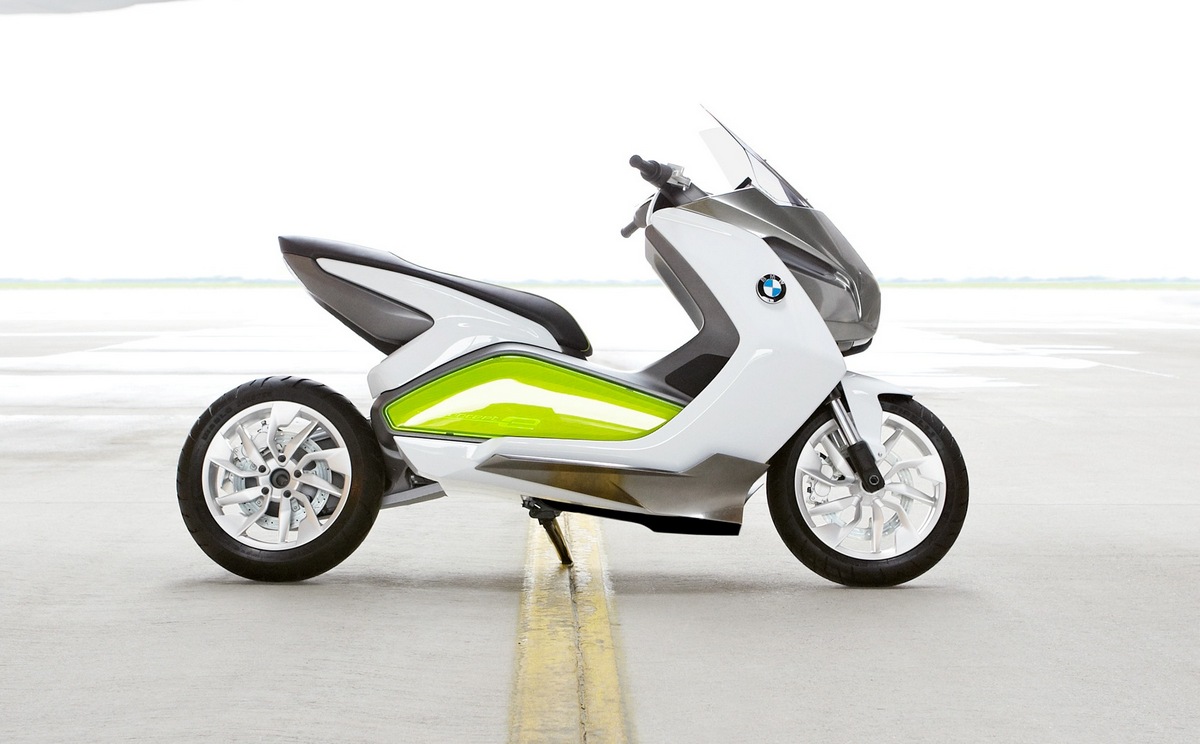
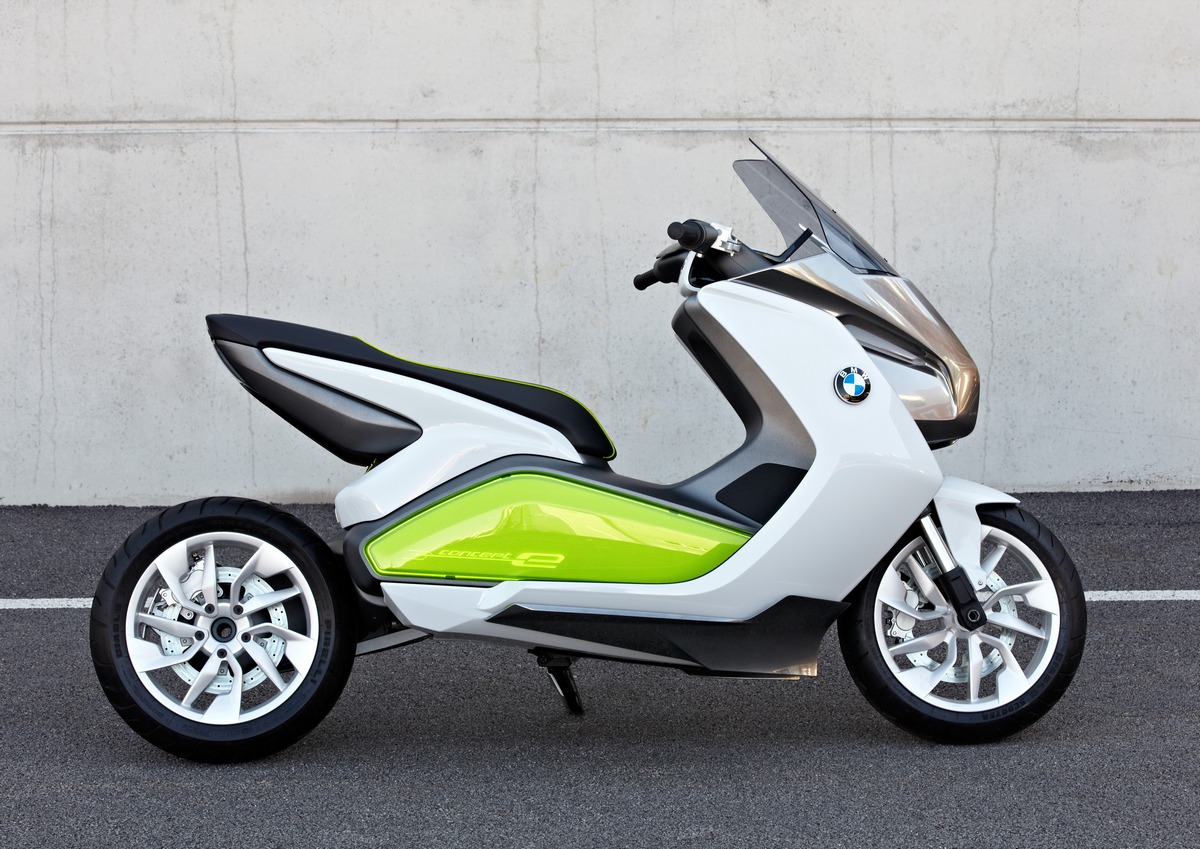
2012 BMW Scooter Concept
  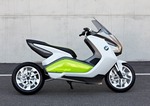
Design concept for a BMW electro-scooter.
Munich. Individual mobility is increasingly
defined in terms of sustainability. The BMW Group
has taken on the challenges of a rapidly changing
world and is now developing serial production solutions
to meet the mobility needs of the future. As an integrated
part of the BMW Group, BMW Motorrad is also addressing
issues of individual single-track mobility and future
customer needs. In this connection, BMW Motorrad is
expanding its business activities to include a new
facet: that of "Urban Mobility".
Building on almost 90 years of experienced
in the field of motorised two-wheel vehicles, BMW
Motorrad is drawing on the conceptual benefits of
single-track vehicles to develop innovative solutions,
adding a new dimension to the area of urban commuting.
Before the end of this year, BMW Motorrad
will establish its new "Urban Mobility"
area with two premium vehicles in the maxi scooter
segment. The BMW maxi scooters combine the functionality
of a scooter with the riding pleasure of a motorcycle.
Both vehicles are powered by high-performance and
efficient 2-cylinder combustion engines.
Based on the BMW Group's sustainability
strategy, BMW Motorrad aims to put a premium offer
on the market in the area of electromobility in the
foreseeable future. At the Frankfurt International
Motor Show (IAA), BMW will be presenting its design
concept in this area for the first time: "BMW
Concept e".
Visionary design for a new
drive concept.
The design study BMW Concept e embodies
the vision of an electrically powered scooter made
by BMW Motorrad. Increasing limitations in traffic
space, growing traffic density as well as both ecological
and economical challenges give rise to new demands
in the area of private transport in the major conurbation
areas in particular. An e-scooter with sustainable
technological solutions and the aesthetic design of
the Concept e provides a response to these changing
urban mobility needs.
At the IAA in Frankfurt, BMW i presents
visionary vehicles which are individually tailored
to their respective purpose - the BMW i3 Concept and
the BMW i8 Concept. They have a completely new "LifeDrive
Architecture" specially developed for electrical
drive and radically different from conventional vehicle
construction. With its fascinating overall concept,
the BMW i8 Concept with plug-in hybrid drive is the
vision of a sustainable sports car come true. The
BMW i3 Concept is the automobile with consistently
sustainable design, conceived specifically for an
urban setting.
With its Concept e, BMW Motorrad shows
how attractive and fascinating the interpretation
of the theme of electrical drive on two wheels can
be in terms of design, while at the same time attracting
attention to its new business area "Urban Mobility".
Concept e - a vision with a
future.
The Concept e is a vision: BMW Motorrad
designers have developed the style and shaping of
the e-scooter of the future - electric, digital, dynamic.
The designers deliberately allowed themselves plenty
of freedom so as to be able to strike out new, creative
paths in the design of components and surfaces.
The shaping and precision achieved
reflect the core values of BMW Motorrad: emotion,
dynamic performance and innovation. At the same time,
the purist, clear design, colouring and choice of
materials instantly suggest a clean, efficient yet
agile single-track vehicle which allows one to move
effortlessly through city traffic.
So the design concept study Concept
e is more than just an idea for a new vehicle. In
addition to technical functionality and quality, the
BMW Motorrad designers attach importance to an emotional
dialogue between rider and vehicle. Their basic premise
is that a vehicle has to do more than just function
- it has to arouse the rider's emotions, too. It has
to inspire the rider again and again, as well as reflect
its specific technological features.
So in the case of the Concept e, the
main aim was to translate the special character of
electric drive technology to the vehicle's outward
appearance.
The Concept e is the conceptual blueprint
of a scooter able to set new standards with innovative
premium electrical drive and provide a sound alternative
form of mobility suitable for everyday use in the
dense traffic of the constantly expanding conurbation
areas and cities of the world today.
Hallmark BMW Motorrad design
elements.
The BMW Concept e is clearly identifiable
as a member of the BMW Motorrad family. As in other
BMW motorcycles, the so-called split face runs from
the upper trim section to above the front wheel cover,
giving the Concept e an unmistakable, dynamic front
view.
The successful BMW Motorrad design
style is also reflected in the styling of the twin-tipped
spoiler in the floating panel of the front trim, a
boomerang-shaped, aerodynamically formed floating
panel. The short, sporty rear highlights the active
riding character of the electrically powered scooter,
giving it a visual sense of dynamic performance which
is underscored by the low cut windshield.
Colour and material concept
blends in with overall concept.
The dynamic performance, fascination
and especially the environmental compatibility of
electrical mobility is reflected in the colour and
material concept. The front and rear side trim sections
finished in “Light white” generate a fascinating
contrast with components such as the upper trim section
in “Black chrome light” and side sills
coated in “Black chrome dark”, thereby
emphasising the scooter's technological features.
The vehicle's overall impression of high quality is
borne out by finely cut details in “Natural
aluminium”, the asymmetrically designed, solid-milled
holder for the front trim section and the central
tunnel in “Textured steel”. The design
of the light alloy wheels is derived from the styling
of the BMW i automobiles.
Made from acrylic glass and featuring a rear-set metal
grid and "Concept e" lettering, the two
side covers of the battery and drive unit in “Electric
yellow” symbolise the technical character of
an electrically powered scooter. In combination with
other accentuations in “Electric yellow”
such as the front trim section, the rear section and
the hollow-bore wheel axle, these stand for the vehicle's
specific properties of maximum environmental compatibility,
supreme dynamic performance and easy handling. To
match this, the charging socket is positioned in the
front section of the central tunnel and features a
transparent plastic cover.
The Concept e highlights its visionary
character by dispensing with conventional rear mirrors.
Instead there are two video cameras integrated in
the glass of the rear light cluster which clearly
displays the situation on the road behind the rider
on two LCD monitors installed in the cockpit. Speed
and other relevant data is shown on a digital display
in the cockpit which is reduced to the essentials.
Innovative technology in a
future serial production vehicle.
The later serial production vehicle
will fully meet customer expectations of a single-track
vehicle offering sustainable mobility. The special
arrangement of all drive components and the design
of the vehicle's geometry will allow agile handling
typical of a scooter as well as a high degree of functionality.
For the power electronics and battery technology,
BMW Motorrad draws on the innovative e-technology
and extensive expertise of the BMW Group. BMW i high
voltage technology (> 60 volts) with the very highest
safety standards enables electrically powered vehicles
to equal the acceleration rates of a maxi scooter
with combustion engine. The generous storage capacity
of the battery, an intelligent battery management
system and efficient brake energy recuperation ensure
a realistic range of 100 kilometres for everyday use.
What is more, BMW Motorrad developers are aiming to
achieve a continuous output and maximum speed which
will enable safe overtaking on urban motorways when
carrying a passenger.
The battery is charged at regular household power
sockets as found in Europe, the USA, Canada and Japan,
There is no need for a special charging station. When
the battery is completely flat, the charging period
is less than three hours. Practical experience with
concept vehicles has already shown that the battery
rarely runs out completely, so charging times are
generally shorter.
In this way, the future serial production
vehicle will provide a long-term, zero-emissions city
travel option which is suitable for everyday use.
|