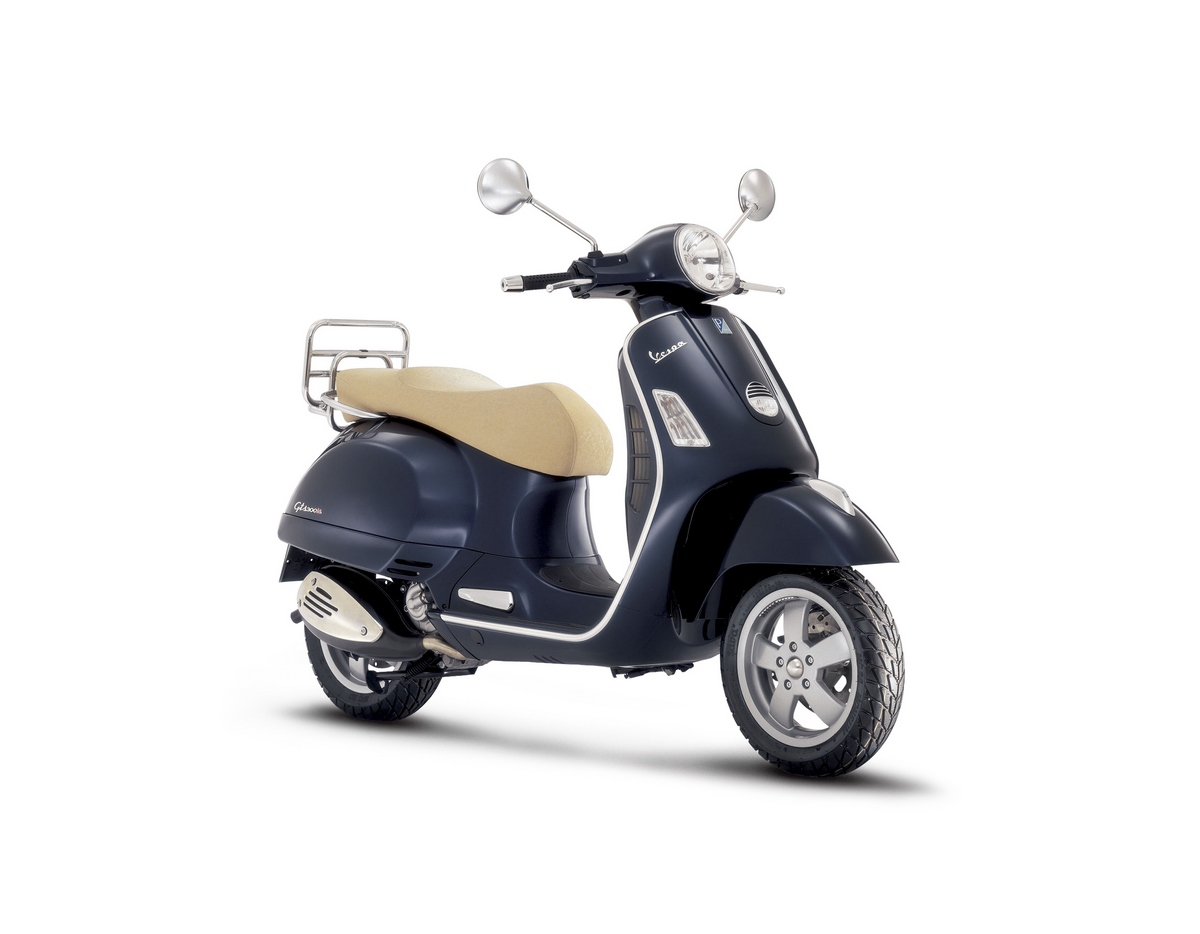
2012 Vespa GTS 300

Vespa GTS, the patriarch of modern Vespa
sportiness, grows in engine size and performance.
The 300 engine - the most powerful Vespa has ever
adopted - adds aggressiveness and power to the elegance
of the design.
Vespa GTS 300 presents itself as a distinctive choice
among GT scooters. It is the only one that can offer
all the class and exclusivity of Vespa, but also agility
and dynamic features, combined with performance and
technological standards of the 300 class.
Design
The lines of the shield, strictly in steel, are those
of the successful Vespa GTS series which, launched
in 2005, redefined the technical and aesthetic standards
of the most sporty Vespa. The rear light group, the
rich instrument panel, the large saddle with a dynamic
line, the evocative rear luggage rack, are just some
of the distinctive signs of a decisive and strong
charactered Vespa.
The original placement of the daylight running light
in the cowl by the horn is an explicit reminder of
the Vespas from the 1950s which gives a further touch
of elegance to this version.
At the front, Vespa GTS 300 can be immediately picked
out of a crowd by the chromed moulding on the mudguard.
The visual flow of the modern and decisive lines of
the cowls, the round and sloping front headlight,
the passenger footrests which fold out from the body,
are characteristics which make the Vespa unique and
they are highlighted in the line of the new GTS 300
i.e.
Vespa GTS maintains the fundamental characteristics
which makes every Vespa a unique vehicle in the scooter
world: the monocoque body, made entirely from steel:
a construction philosophy which ensures legendary
sturdiness, reliability and superior rigidity, all
to the advantage of riding precision.
Its perfect ergonomics and the natural seating position
have always contributed to the easy ride of the Vespa.
The saddle of the new Vespa GTS provides superior
comfort even on medium to long routes. The meticulously
crafted trimmings and double stitching bear witness
to the care and attention to detail which makes every
Vespa stand out.
The spacious storage compartment under the saddle
can hold two demi-jet helmets plus other objects,
while the space in the leg shield back plate is ideal
for smaller objects such as sunglasses, documents,
mobile phone and anything else that the rider may
need to keep within reach. The analogue instrument
panel is practical and functional with white numbers
which contrast well against the black background.
Body and chassis architecture
The Vespa body, made entirely in steel, also acts
as the monocoque chassis. Since 1946 it has been the
characteristic which has always made Vespa stand out
from other scooters.
Within the body of the Vespa GTS 300 Super, beneath
the seat, is the fuel tank. In spite of an impressive
9.2 litre capacity offering outstanding range, the
tank does not compromise under-seat storage space
or access to the engine once the helmet carrier has
been lifted off (no tools required). Complementing
the legendary rigidity of the steel body, the Vespa
GTS 300 Super boasts a chassis architecture featuring
12” wheels shod with a 120/70 tyre at the front
and a 130/70 tyre at the rear.
The front suspension uses the classic link arm layout,
a traditional feature in Vespa history with excellent
dynamic functional characteristics. At the rear, two
pre-load adjustable hydraulic shock absorbers are
fixed to the transmission crankcase and exhaust support.
Vespa GTS 300 boasts high braking power thanks to
two 220 mm discs.
A new 300 engine for Vespa GTS
The new 300, single cylinder 4 stroke, 4 valve, liquid
cooled, electronic injection engine provides maximum
power of 22 HP at 7,500 rpm and puts out a maximum
torque of 22.3 Nm at just 5,000 rpm: values which
guarantee the Vespa GTS quick throttle response and
extremely brilliant performance, making it an ideal
vehicle both in city traffic and for touring, even
at long range, in complete comfort, whether alone
or with a passenger.
The new Vespa GTS engine is fast, sporty, spirited
and silky smooth thanks to electronic fuel injection,
but also silent running and compliant with the strictest
anti-emissions standards (Euro3). An oil bath free
wheel system reduces noise on starting, while normal
use is attenuated by new engine casings, that also
contributed to improved transmission cooling.
|