1969 Triumph Trident 750cc
American Record Machine
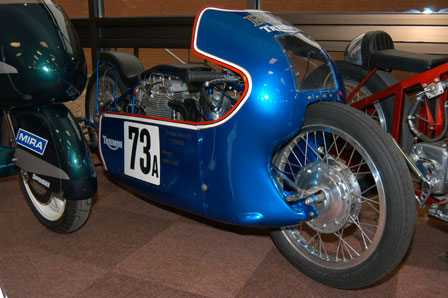
Nowhere in the British Isles is a place where
the ultimate top speed of a motorcycle or can
can be proven. Even aerodrome runways are not
long enough but the USA has suitable sites in
plenty and the famous Bonneville Salt Flats,
the dried up bed of a salt lake, is the venue
for many World Record attempts and hosts an
annual Speed Week for would be record breakers.
Many british bikes have shown their speed potential
at Bonneville, Triumpg twins in particular and
the three-cylinder Trident and its cousin the
BSA Rocket 3 was an obvious contender for bigger
capacity records for is was basically a Triumph
twin and half.
A Triumph twin of 500cc with an extra 250cc
cylinder in the middle.
These triples were an example of what British
engineers have always doen so well when faced
with an urgent need. The need was the demand
from America for more 'cubes', more cubic capacity.
Vertical twins of 650 amd over produced unacceptable
levels of vibration though Norton overcame it
to some extent by mounting their 750 twin Commando
on rubber but Triumph designers Hopwood and
Hele came up with the twin and a half which
was tremendously successful and even beat the
rival Honda 750 four cylinder on the tracks.
American maximum speed events are run in a
bewildering variety of classes. This one ran
in the Altered frame with Partial streamlining,
altered fuel (methanol) class up to 750cc and
set a record of 169.33 mph in 1969. The frame
certainly has been altered, the engine set well
back in a lengthened , lowered frame and high
speed steering problems have been avoided by
hub centre steering which replaces normal 'whippy'
front forks. Fuel is pumped from tanks mounted
low down in front of the engine. Electronic
ignition fires two plugs in each cylinder and
large Japenese Mikuni carburettors replace the
normal British instruments. Built by a Californian
firm specialising in racing services it was
ridden to the record by Jeff Gough.
Kept in California by owner Bud Hare, an earlier
record holder, the machine came near to being
scrapped when he died. Only the fact that the
scrap man was a motorcycle enthusiast saved
it. He told a motorcycle dealer friend who bought
it and saved its history.
|


