BSA
A65 Lightning Gallery
BSA introduced a revised series of parallel
twins for the 1962 season featuring unit construction
and revised styling. The presence of the Rocket
Gold Star in the BSA catalogue initially precluded
the need for a production racing variant, however,
once production of the RGS ceased a competitive
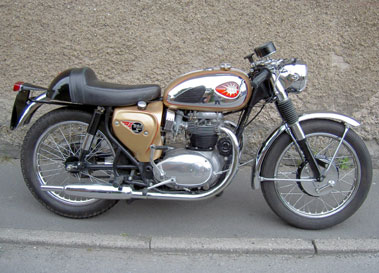
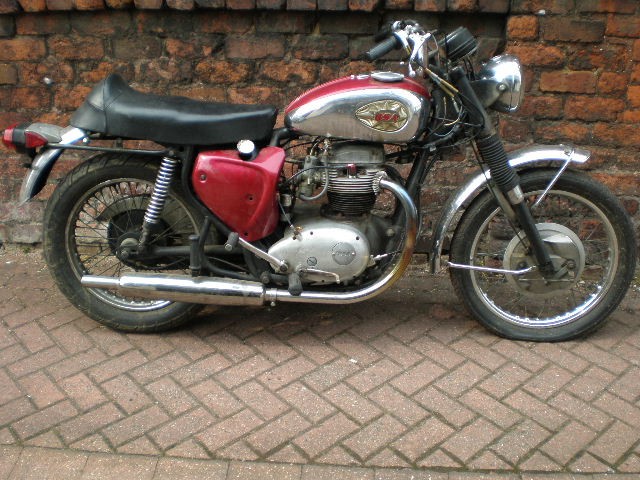
replacement was required. The Lightning Clubman
sought to address this deficiency when it was
introduced in September 1964, continuing in
production until October 1965, in the process
becoming the most charismatic of all the unit
BSA twins.
The model was equipped with dropped handlebars,
a humped single seat, rearsets, a cranked kick-start,
twin carburettors, a siamesed exhaust system
with a less restrictive silencer and a close
ratio gearbox.
| Bike |
Image |
Description |
| 1964 BSA A65 Lightning Clubman |
 |
More BSA
A65 Lightning Clubman info... |
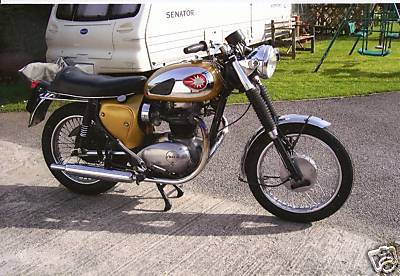
| 1965 BSA Lightning Clubman |
 |
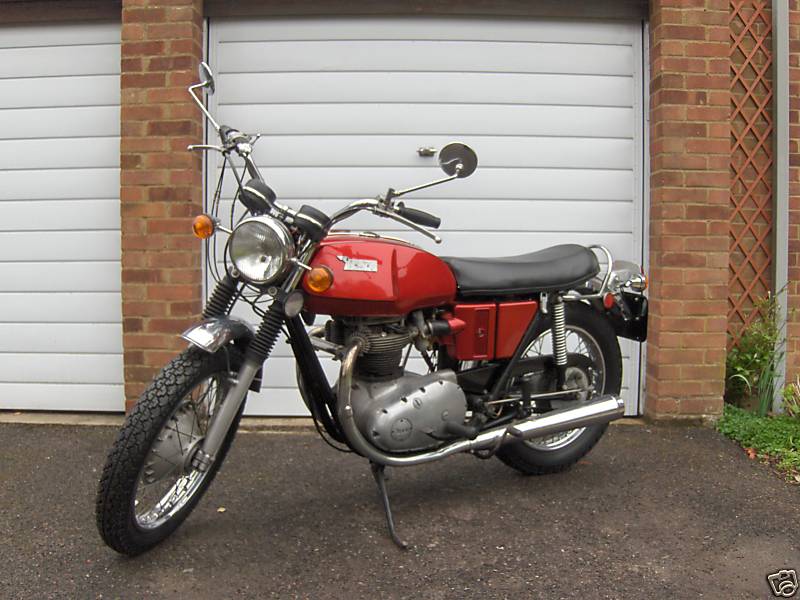
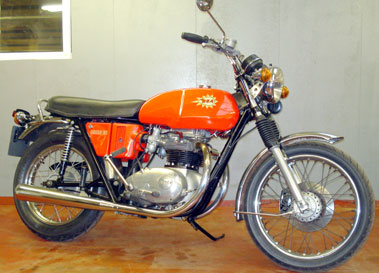
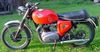
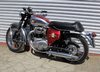
BSA offered three variants of the A65
in Britain during 1967, the single carburettor
Thunderbolt, the sporting Lightning equipped
with two Amal Concentric carburettors
and the range topping Spitfire aimed at
the clubman. The Lightning proved popular
combining good performance and flexibility
with secure handling and braking.
|
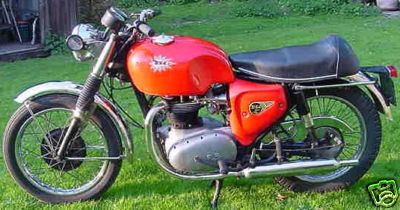
| 1965 BSA A65 Lightning |
 |
|
| 1967 BSA A65 Lightning |
 |
Once introduced in the early 1960s
the design of the BSA unit construction
twin remained largely unaltered in both
500 and 650 forms until 1964 when various
modifications were incorporated into both
the 500 and the 650 A65 design, the most
significant being the splayed port cylinder
head, fitted with its twin carburettors.
The resultant machine proved to be a potent
mount, and well capable of challenging
the high performance Triumph twins of
the day. More BSA
Lightning A65 info...
Image provided by www.classic-auctions.com.
|
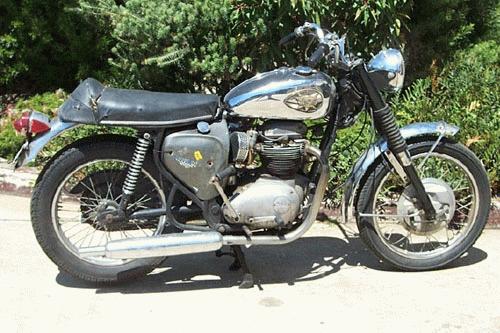
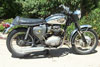
| 1969 BSA A65L Lightning 650 |
 |
|
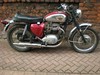
| 1970 BSA A65L 650cc Lightning |
 |
|
| 1972 BSA Lightning |
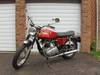 |
|
| 1974 BSA A65 Lightning |
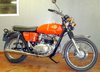 |
1971 wittnessed the introduction of
a new oil bearing frame for both the BSA
and Triumph twin cylinder ranges. Developed
at Umberslade Hall, the new chassis incorporated
internally sprung slimline forks, revised
brakes and amended styling.
Towards the end of BSA's activities
as a manufacturer of motorcycles the company
developed at the request of their American
arm, a "longstroke" engine displacing
approximately 750cc. Intended to provide
a powerplant for the company's US flat
track racing team, 200 machines were produced
for homologation purposes and in doing
so provided the inspiration for firms
such as Devimead who subsequently offered
"Jumbo" conversions for the
A65 powerplant.
Image provided by www.classic-auctions.com.
|
Please e-mail the webmaster if
you have a picture worth adding to our database,
e-mail: webmaster@motorbike-search-engine.co.uk
|
| |