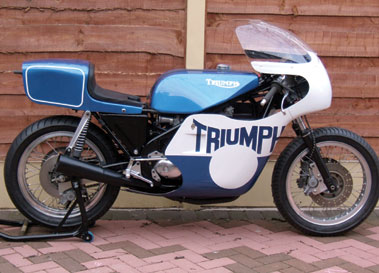
Triumph 3 Trident

The howl of a BSA or Triumph triple in competition
is as familiar to classic enthusiasts today as it
was to racing enthusiasts at the beginning of the
seventies, however, our familiarity with the machines
may occasionally cause us to forget why they are so
popular. Born out of expediency as a result of the
emerging threat from Japan both on the road and the
track they went on to secure a place in history based
on success.
The original concept for a triple based on one and
a half Speed Twins was originally muted at the beginning
of the sixties, although the go ahead for work to
commence did not finally occur until 1964. The viability
of the concept was validated when the new model was
announced in September 1968 to excellent reviews.
With the road going models in production, work commenced
at the end of 1969 on a racing version to compete
at Daytona in March 1970. Whilst Doug Hele oversaw
the engine preparation Rob North designed a specially
commissioned frame to house the unit, the marriage
of the two proving to be a success from the outset.
Gene Romero set a lap record during practise of 164.44
mph. During the race Mike Hailwood's machine overheated,
but Romero and Don Castro were able to secure second
and third places. Successes followed on both sides
of the Atlantic with the new machines securing victories
including the Production TT and the Bold'Or. The team
returned to Daytona for 1971, the bikes now equipped
with Lockheed discs all round and a revised frame
that reduced the machines overall height, returning
to the UK having secured all three steps on the Podium
thanks to Dick Mann, Romero and Emde. This commenced
another year of success for the triples including
John Cooper's famous victory at the Mallory Park Race
of the Year when he headed a field home that included
Agostini on the MV triple, Sheene on a Suzuki and
Read And Saarinen on Yamaha's.
Unfortunately, the announcement during October 1971
that the BSA-Triumph Group were in financial difficulties
marked the end, at least as a works team for the Rob
North framed triples, although Slippery Sam continued
the triples dominance in the Production TT winning
again in 1972, 1973, 1974 and 1975.
The growth of classic racing resulted in machines
built to mirror the Rob North framed triples returning
to the track.
|
|