Honda Racing History - 1959-1967
Honda
racing 1954-1958 | Honda
racing 1977-1982 | Honda
racing 1983-2001 | Honda
racing 2002
1959: The First Steps Towards Greatness
 Until
the 1950s, the World GP races were held exclusively
in Europe, and dominated by European manufacturers.
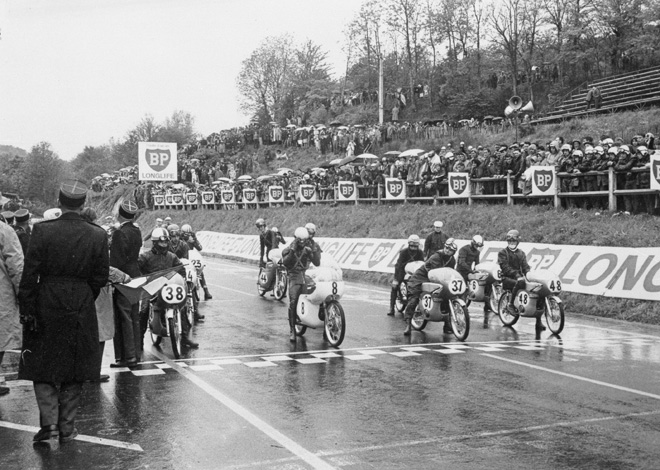
The 1959 Isle of Man TT witnessed the first entry
from a Japanese team in the World GP series, the four
125cc Hondas being managed by Kiyoshi Kawashima, who
had the complete trust and support of Soichiro Honda.
This first challenge resulted in Honda claiming 6th,
7th, 8th and 11th in the 125cc light weight class,
as well as the Manufacturers’ Team Award. At
the time, against stiff opposition, this level of
success was truly remarkable, prompting Honda to compete
in the full GP series in the following year. Until
the 1950s, the World GP races were held exclusively
in Europe, and dominated by European manufacturers.
The 1959 Isle of Man TT witnessed the first entry
from a Japanese team in the World GP series, the four
125cc Hondas being managed by Kiyoshi Kawashima, who
had the complete trust and support of Soichiro Honda.
This first challenge resulted in Honda claiming 6th,
7th, 8th and 11th in the 125cc light weight class,
as well as the Manufacturers’ Team Award. At
the time, against stiff opposition, this level of
success was truly remarkable, prompting Honda to compete
in the full GP series in the following year.
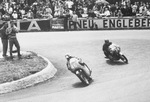 From
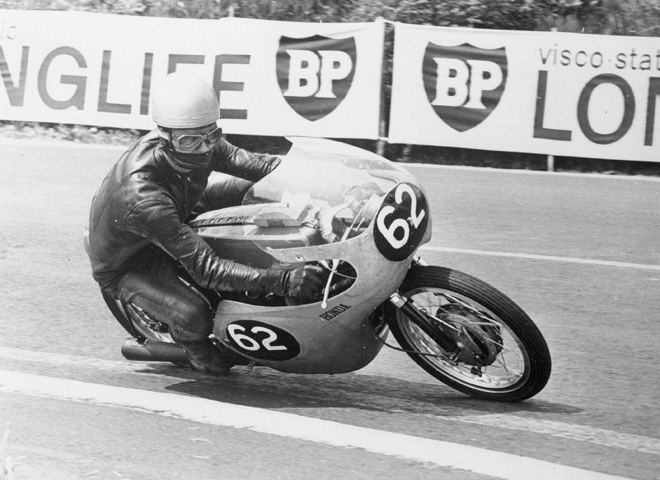
1960, Honda entered all of the World GP races with
125cc and 250cc machines, its efforts finally rewarded
with a maiden win in the 1961 Spanish Grand Prix the
opening event, when Tom Phillis brought his 125cc
Honda home in first place. In the next race, in Germany,
Kunimitsu Takahashi became the first Japanese rider
to win a World GP event, with his 250cc Honda the
first Japanese bike to win in this Class. That same
year, Honda was declared the double World Champion,
claiming the 125cc and 250cc categories. From
1960, Honda entered all of the World GP races with
125cc and 250cc machines, its efforts finally rewarded
with a maiden win in the 1961 Spanish Grand Prix the
opening event, when Tom Phillis brought his 125cc
Honda home in first place. In the next race, in Germany,
Kunimitsu Takahashi became the first Japanese rider
to win a World GP event, with his 250cc Honda the
first Japanese bike to win in this Class. That same
year, Honda was declared the double World Champion,
claiming the 125cc and 250cc categories. 
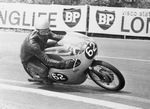 In
the third year of its TT challenge program, at last
Honda was able to lift the winning trophy on the Isle
of Man thanks to some sterling rides from Mike Hailwood
that enabled him to claim victory in the 125cc and
250cc races. Indeed, the Japanese manufacturer took
the first five places in both the 125cc and 250cc
Classes, the latter bringing particular pleasure to
Soichiro Honda. In
the third year of its TT challenge program, at last
Honda was able to lift the winning trophy on the Isle
of Man thanks to some sterling rides from Mike Hailwood
that enabled him to claim victory in the 125cc and
250cc races. Indeed, the Japanese manufacturer took
the first five places in both the 125cc and 250cc
Classes, the latter bringing particular pleasure to
Soichiro Honda.
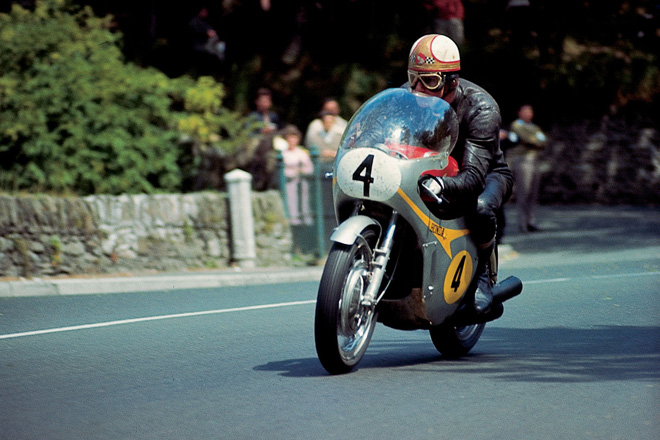
After Honda’s dramatic domination of the 250cc
Class, it moved up into the 500cc category in 1966,
by which time the marque was represented in all Classes
(50, 125, 250, 350 and 500cc) except for sidecars.
Almost unbelievably, Honda claimed the World Championship
title in each. Honda clocked up a total of 138 wins
in this first sortie into World GP racing before the
company took a break from the arena in 1967. It had
shown that Honda had the technology to compete on
the world stage, and successfully spread the Honda
name across the globe. 
Japanese Motorcycle Manufacturers Reined In
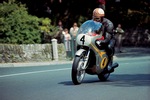 Honda’s
racing success in the early 1960s prompted other Japanese
manufacturers to join the World GP scene, their domination
sealing the fate of those from Europe, who struggled
to compete. At that time, in the 250cc and 350cc Classes,
Japanese racing machines were sporting six-cylinder
engines and gearboxes with between seven and ten speeds,
while production models were typically four- or five-speed
twins. The huge difference in specification between
a road and race bike was unacceptable in the eyes
of the FIM and, in 1969, each Class was given a new
set of guidelines (including weight, number of cylinders
and a maximum of six speeds) to narrow the gap. Honda’s
racing success in the early 1960s prompted other Japanese
manufacturers to join the World GP scene, their domination
sealing the fate of those from Europe, who struggled
to compete. At that time, in the 250cc and 350cc Classes,
Japanese racing machines were sporting six-cylinder
engines and gearboxes with between seven and ten speeds,
while production models were typically four- or five-speed
twins. The huge difference in specification between
a road and race bike was unacceptable in the eyes
of the FIM and, in 1969, each Class was given a new
set of guidelines (including weight, number of cylinders
and a maximum of six speeds) to narrow the gap.
|